Los Angeles Dodgers
The Los Angeles Dodgers, from Brooklyn's Boys of Summer to the Ohtani-era back-to-back champions of 2024 and 2025: full franchise history, titles and record.
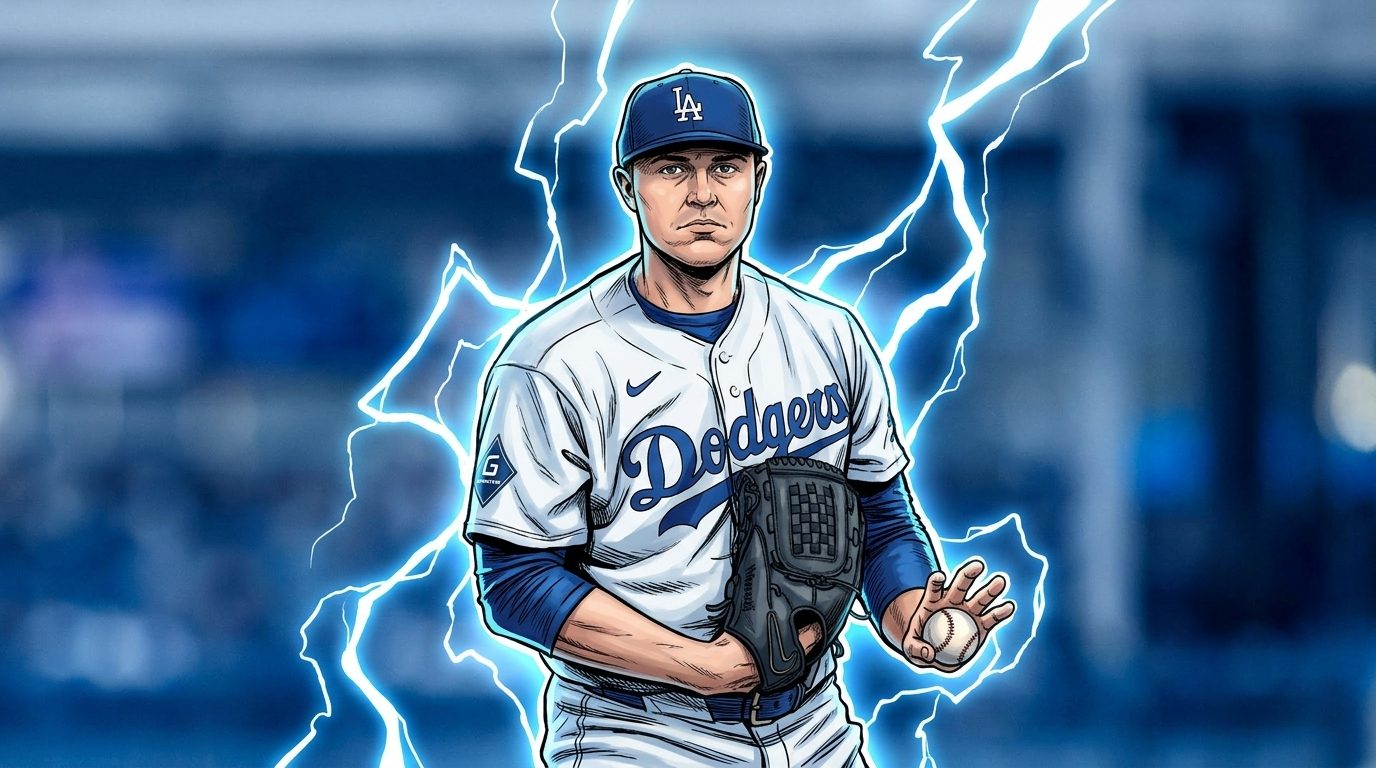
The Los Angeles Dodgers are one of baseball’s defining institutions, a franchise whose history runs from the cramped grandstands of Brooklyn’s Ebbets Field to the richest payroll the sport has ever seen. Born in Brooklyn in the 1880s and relocated to Southern California in 1958, the club has banked more than 11,600 regular-season wins and a .533 all-time winning percentage, nine World Series titles and 26 National League pennants. They integrated the modern major leagues with Jackie Robinson, built the “Boys of Summer,” rode Sandy Koufax to the top of the 1960s, and — behind Shohei Ohtani, Mookie Betts and Freddie Freeman — became the first repeat champions in a quarter-century by winning the 2024 and 2025 World Series.
| Vitals | |
|---|---|
| Founded | 1883 (Brooklyn); major-league debut 1884 in the American Association |
| League / division | National League — NL West |
| Stadium | Dodger Stadium, Los Angeles (opened 1962) |
| Owner | Guggenheim Baseball Management (chairman Mark Walter) |
| Manager (Oct. 12, 2026) | Dave Roberts (since 2016) |
| World Series titles | 9 — 1955, 1959, 1963, 1965, 1981, 1988, 2020, 2024, 2025 |
Brooklyn beginnings (1883–1919)
The franchise took root in Brooklyn in 1883 and entered the major-league American Association in 1884, an early club cycling through nicknames — Grays, Grooms, Bridegrooms — as its players came and went. Brooklyn won the American Association pennant in 1889, then jumped to the National League for 1890 and won the pennant in its very first NL season.
By the turn of the century the club had become the Superbas, and later the Robins, named for manager Wilbert Robinson, who ran the team from 1914 to 1931. Ebbets Field opened on April 9, 1913, a 1–0 loss to the Phillies that began a half-century of baseball in Flatbush. Brooklyn reached its first modern World Series in 1916, losing to the Boston Red Sox four games to one.
The Robins, the 1920 pennant, and the lean years (1920–1946)
Brooklyn won another pennant in 1920 but fell to Cleveland five games to two in a best-of-nine Series remembered for Bill Wambsganss’s unassisted triple play — still the only one in World Series history. The 1920s and 1930s “Daffiness” Robins were colorful and mostly also-rans, though ace Dazzy Vance went 28–6 with a 2.16 ERA to win the inaugural NL MVP in 1924.
Respectability returned under Larry MacPhail and Leo Durocher. The 1941 club won 100 games and the pennant, then lost the World Series to the Yankees four games to one, the turning point a dropped third strike by catcher Mickey Owen in Game 4. The groundwork for something far bigger was already being laid in the front office.
The Boys of Summer (1947–1957)
On April 15, 1947, Jackie Robinson took the field at Ebbets Field and broke baseball’s color line, the culmination of general manager Branch Rickey’s plan to integrate the majors. Robinson’s debut before 26,623 fans remade the sport. Around him grew the fabled “Boys of Summer”: captain Pee Wee Reese, catcher Roy Campanella, center fielder Duke Snider, first baseman Gil Hodges, and pitcher Don Newcombe.
The era’s heartbreak was the Yankees. Brooklyn lost the World Series to New York in 1947, 1949, 1952 and 1953, and lost the 1951 pennant to the Giants on Bobby Thomson’s “Shot Heard ‘Round the World”. Finally, on October 4, 1955, Johnny Podres threw a Game 7 shutout at Yankee Stadium for a 2–0 win — Brooklyn’s first and only World Series title. The Dodgers won the pennant again in 1956 but lost to the Yankees in seven, a Series defined by Don Larsen’s perfect game.
Go West: the move to Los Angeles (1957–1961)
Owner Walter O’Malley moved the Dodgers to Los Angeles after the 1957 season, ending 74 years in Brooklyn after the city would offer only a ballpark site in Queens. The last Ebbets Field game, on September 24, 1957, drew just 6,702 fans. The club played its first Los Angeles game on April 18, 1958, beating the transplanted Giants 6–5.
For four seasons the Dodgers played in the cavernous Los Angeles Memorial Coliseum, a football-and-track stadium whose left-field fence sat barely 250 feet away and was topped by a towering screen. They adapted quickly: in 1959 they beat the Chicago White Sox four games to two for the first title in Los Angeles. Dodger Stadium opened in Chavez Ravine on April 10, 1962.
Koufax, Drysdale, and the 1960s crowns (1962–1966)
The new ballpark ushered in a pitching dynasty built on Sandy Koufax and Don Drysdale. Shortstop Maury Wills stole a then-record 104 bases to win the 1962 NL MVP, and Drysdale won the Cy Young Award that year. In 1963 the Dodgers swept the Yankees in four games, Koufax striking out 15 in Game 1.
Koufax’s peak was historic. On September 9, 1965, he threw a perfect game against the Cubs, his fourth no-hitter in four seasons. Weeks later he clinched the 1965 World Series over Minnesota with a Game 7 shutout on two days’ rest. The Dodgers returned to the Series in 1966 but were swept by the Baltimore Orioles, and that November Koufax retired at 30 with an arthritic elbow, ending the era at its summit.
The infield, Lasorda, and Fernandomania (1970–1981)
The 1970s Dodgers were defined by the longest-running infield in history — Steve Garvey, Davey Lopes, Bill Russell and Ron Cey, who started together for eight-and-a-half years. Walter Alston, a four-time champion, handed the dugout to Tommy Lasorda in late 1976. The club won pennants in 1974, 1977 and 1978 but lost each World Series — to Oakland and twice to the Yankees.
Redemption arrived in the strike-split 1981 season. Rookie left-hander Fernando Valenzuela set off “Fernandomania,” becoming the only player ever to win Rookie of the Year and the Cy Young in the same season. In October the Dodgers lost the first two games in New York, then beat the Yankees four straight for the title, with Cey, Pedro Guerrero and Steve Yeager sharing Series MVP honors.
Gibson, Hershiser, and 1988
The 1988 champions were carried by two unforgettable performances. Right-hander Orel Hershiser closed the regular season with a record 59 consecutive scoreless innings, then won NLCS and World Series MVP honors. In Game 1 of the Series, an injured Kirk Gibson — his only plate appearance of the Series — hit a two-run walk-off homer off Oakland closer Dennis Eckersley for a 5–4 win.
The underdog Dodgers then dispatched the heavily favored Athletics four games to one, clinching on October 20 behind a Hershiser complete game. It was the franchise’s sixth World Series title — and, as it turned out, the last for 32 years.
Piazza, Nomo, and the wilderness (1989–2011)
The years after 1988 brought stars but no deep October runs. Catcher Mike Piazza, a 62nd-round pick, won a unanimous NL Rookie of the Year in 1993, and in 1995 Hideo Nomo’s “Nomomania” earned him Rookie of the Year and opened the majors to a wave of Japanese talent. But the team was swept in the 1995 and 1996 playoffs, and in 1998 new Fox ownership stunned fans by trading Piazza.
Ownership turmoil deepened under Frank McCourt, who bought the club in 2004 with heavy debt. Amid a divorce battle and a blocked television deal, the Dodgers filed for Chapter 11 bankruptcy on June 27, 2011, forcing a sale that would transform the franchise.
The Guggenheim revival (2012–2019)
Guggenheim Baseball Management — fronted by Mark Walter, Stan Kasten and Magic Johnson — bought the Dodgers for a then-record $2.15 billion in 2012. Flush with resources, the club won eight straight NL West titles (2013–2020) — a run the Giants finally ended in 2021 — and leaned on homegrown ace Clayton Kershaw, a three-time Cy Young winner who added the 2014 NL MVP. Dave Roberts took over as manager for 2016.
Two World Series ended in heartbreak. The Dodgers won 104 games in 2017 — the most in the Los Angeles era to that point, though still short of the franchise record of 105 set by the 1953 Brooklyn Dodgers — but lost the Series in seven to a Houston Astros team later found to have illegally stolen signs; in 2018 they fell to the Boston Red Sox in five, a Series that included an 18-inning Game 3, the longest in postseason history.
2020: ending the 32-year drought
The pandemic-shortened 2020 season finally delivered. After acquiring Mookie Betts from Boston that February, the Dodgers went 43–17 and beat the Tampa Bay Rays four games to two in the neutral-site “bubble” at Arlington, Texas. Shortstop Corey Seager was Series MVP, and a 32-year title drought was over.
The payroll powerhouse: Ohtani, Betts, Freeman, and back-to-back titles (2021–2025)
The Dodgers then turned financial muscle into a juggernaut, winning 106 games in 2021, 111 in 2022, and reeling in the biggest names in the sport. Freddie Freeman signed for six years and $162 million in 2022; then, in December 2023, Shohei Ohtani agreed to a record 10-year, $700 million deal with $680 million deferred, joined days later by pitcher Yoshinobu Yamamoto on a record 12-year, $325 million contract.
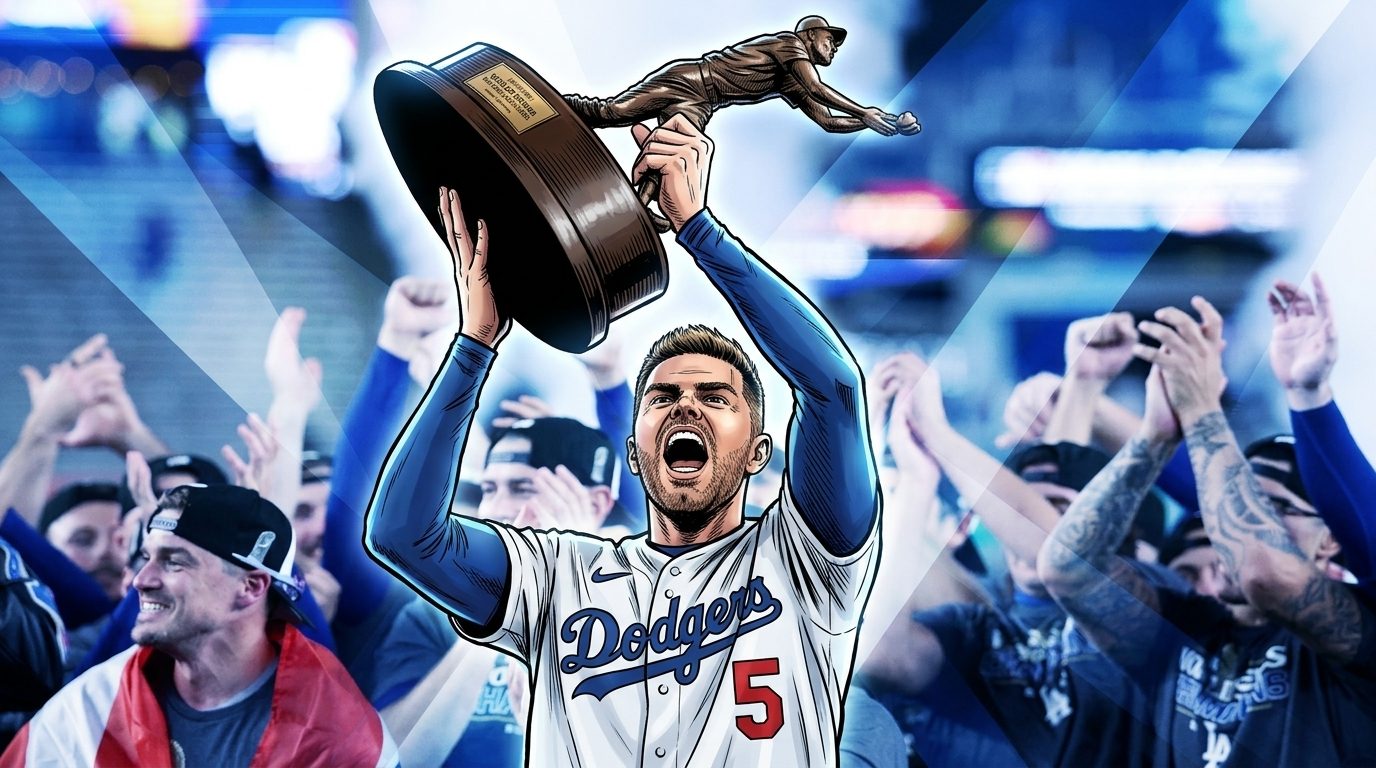
The 2024 title validated the spending. Ohtani produced the first 50-homer, 50-steal season in major-league history and a unanimous NL MVP, and the Dodgers beat the Yankees four games to one. Freeman was MVP, opening with the first walk-off grand slam in World Series history and homering in a record six straight World Series games.
In 2025 they did what no team had done in a generation. Carrying the largest luxury-tax payroll in history and a record $169.4 million tax bill, the Dodgers beat the Toronto Blue Jays in a seven-game Series capped by Will Smith’s 11th-inning home run in a 5–4 Game 7, with Yamamoto named MVP. They became the first repeat champions since the 1998–2000 Yankees.
Retired numbers
The Dodgers have retired 12 uniform numbers, most honoring Hall of Famers from the Brooklyn and early Los Angeles eras; the triple ceremony of June 4, 1972 enshrined Sandy Koufax, Roy Campanella and Jackie Robinson together. Robinson’s No. 42 was later retired across all of Major League Baseball in 1997. The club has also honored broadcasters Vin Scully and Jaime Jarrín with retired microphones rather than numbers.
| No. | Player | Pos. | Team tenure | Retired |
|---|---|---|---|---|
| 1 | Pee Wee Reese | SS | 1940–1958 | July 1, 1984 |
| 2 | Tommy Lasorda | Player / manager | 1954–1996 | Aug. 15, 1997 |
| 4 | Duke Snider | CF | 1947–1962 | July 6, 1980 |
| 14 | Gil Hodges | 1B | 1943–1961 | June 4, 2022 |
| 19 | Jim Gilliam | 2B / coach | 1953–1978 | Oct. 10, 1978 |
| 20 | Don Sutton | P | 1966–1980, 1988 | Aug. 14, 1998 |
| 24 | Walter Alston | Manager | 1954–1976 | June 5, 1977 |
| 32 | Sandy Koufax | P | 1955–1966 | June 4, 1972 |
| 34 | Fernando Valenzuela | P | 1980–1990 | Aug. 11, 2023 |
| 39 | Roy Campanella | C | 1948–1957 | June 4, 1972 |
| 42 | Jackie Robinson | 2B | 1947–1956 | June 4, 1972 |
| 53 | Don Drysdale | P | 1956–1969 | July 1, 1984 |
Season by season
Every season in franchise history, folded by decade, newest first.
The 2020s 551–319 · 6 playoff berths · 3 World Series titles
| Season | W–L | Finish | Playoffs |
|---|---|---|---|
| 2020 | 43–17 | 1st (NL West) | Won WS (4–2) |
| 2021 | 106–56 | 2nd (NL West) | Lost NLCS (2–4) |
| 2022 | 111–51 | 1st (NL West) | Lost NLDS (1–3) |
| 2023 | 100–62 | 1st (NL West) | Lost NLDS (0–3) |
| 2024 | 98–64 | 1st (NL West) | Won WS (4–1) |
| 2025 | 93–69 | 1st (NL West) | Won WS (4–3) |
The 2010s 919–701 · 7 playoff berths · 2 pennants
| Season | W–L | Finish | Playoffs |
|---|---|---|---|
| 2010 | 80–82 | 4th (NL West) | — |
| 2011 | 82–79 | 3rd (NL West) | — |
| 2012 | 86–76 | 2nd (NL West) | — |
| 2013 | 92–70 | 1st (NL West) | Lost NLCS (2–4) |
| 2014 | 94–68 | 1st (NL West) | Lost NLDS (1–3) |
| 2015 | 92–70 | 1st (NL West) | Lost NLDS (2–3) |
| 2016 | 91–71 | 1st (NL West) | Lost NLCS (2–4) |
| 2017 | 104–58 | 1st (NL West) | Lost WS (3–4) |
| 2018 | 92–71 | 1st (NL West) | Lost WS (1–4) |
| 2019 | 106–56 | 1st (NL West) | Lost NLDS (2–3) |
The 2000s 862–758 · 4 playoff berths
| Season | W–L | Finish | Playoffs |
|---|---|---|---|
| 2000 | 86–76 | 2nd (NL West) | — |
| 2001 | 86–76 | 3rd (NL West) | — |
| 2002 | 92–70 | 3rd (NL West) | — |
| 2003 | 85–77 | 2nd (NL West) | — |
| 2004 | 93–69 | 1st (NL West) | Lost NLDS (1–3) |
| 2005 | 71–91 | 4th (NL West) | — |
| 2006 | 88–74 | 2nd (NL West) | Lost NLDS (0–3) |
| 2007 | 82–80 | 4th (NL West) | — |
| 2008 | 84–78 | 1st (NL West) | Lost NLCS (1–4) |
| 2009 | 95–67 | 1st (NL West) | Lost NLCS (1–4) |
The 1990s 797–757 · 2 playoff berths
| Season | W–L | Finish | Playoffs |
|---|---|---|---|
| 1990 | 86–76 | 2nd (NL West) | — |
| 1991 | 93–69 | 2nd (NL West) | — |
| 1992 | 63–99 | 6th (NL West) | — |
| 1993 | 81–81 | 4th (NL West) | — |
| 1994 | 58–56 | 1st (NL West) | No postseason (strike) |
| 1995 | 78–66 | 1st (NL West) | Lost NLDS (0–3) |
| 1996 | 90–72 | 2nd (NL West) | Lost NLDS (0–3) |
| 1997 | 88–74 | 2nd (NL West) | — |
| 1998 | 83–79 | 3rd (NL West) | — |
| 1999 | 77–85 | 3rd (NL West) | — |
The 1980s 825–741 · 4 playoff berths · 2 World Series titles
| Season | W–L | Finish | Playoffs |
|---|---|---|---|
| 1980 | 92–71 | 2nd (NL West) | — |
| 1981 | 63–47 | 1st (NL West, 1st half) | Won WS (4–2) |
| 1982 | 88–74 | 2nd (NL West) | — |
| 1983 | 91–71 | 1st (NL West) | Lost NLCS (1–3) |
| 1984 | 79–83 | 4th (NL West) | — |
| 1985 | 95–67 | 1st (NL West) | Lost NLCS (2–4) |
| 1986 | 73–89 | 5th (NL West) | — |
| 1987 | 73–89 | 4th (NL West) | — |
| 1988 | 94–67 | 1st (NL West) | Won WS (4–1) |
| 1989 | 77–83 | 4th (NL West) | — |
The 1970s 910–701 · 3 pennants
| Season | W–L | Finish | Playoffs |
|---|---|---|---|
| 1970 | 87–74 | 2nd (NL West) | — |
| 1971 | 89–73 | 2nd (NL West) | — |
| 1972 | 85–70 | 2nd (NL West) | — |
| 1973 | 95–66 | 2nd (NL West) | — |
| 1974 | 102–60 | 1st (NL West) | Lost WS (1–4) |
| 1975 | 88–74 | 2nd (NL West) | — |
| 1976 | 92–70 | 2nd (NL West) | — |
| 1977 | 98–64 | 1st (NL West) | Lost WS (2–4) |
| 1978 | 95–67 | 1st (NL West) | Lost WS (2–4) |
| 1979 | 79–83 | 3rd (NL West) | — |
The 1960s 878–729 · 3 pennants · 2 World Series titles
| Season | W–L | Finish | Playoffs |
|---|---|---|---|
| 1960 | 82–72 | 4th (NL) | — |
| 1961 | 89–65 | 2nd (NL) | — |
| 1962 | 102–63 | 2nd (NL) | — |
| 1963 | 99–63 | 1st (NL) | Won WS (4–0) |
| 1964 | 80–82 | 6th (NL) | — |
| 1965 | 97–65 | 1st (NL) | Won WS (4–3) |
| 1966 | 95–67 | 1st (NL) | Lost WS (0–4) |
| 1967 | 73–89 | 8th (NL) | — |
| 1968 | 76–86 | 7th (NL) | — |
| 1969 | 85–77 | 4th (NL West) | — |
The 1950s 913–630 · 5 pennants · 2 World Series titles · moved to Los Angeles in 1958
| Season | W–L | Finish | Playoffs |
|---|---|---|---|
| 1950 | 89–65 | 2nd (NL) | — |
| 1951 | 97–60 | 2nd (NL) | — |
| 1952 | 96–57 | 1st (NL) | Lost WS (3–4) |
| 1953 | 105–49 | 1st (NL) | Lost WS (2–4) |
| 1954 | 92–62 | 2nd (NL) | — |
| 1955 | 98–55 | 1st (NL) | Won WS (4–3) |
| 1956 | 93–61 | 1st (NL) | Lost WS (3–4) |
| 1957 | 84–70 | 3rd (NL) | — (final Brooklyn season) |
| 1958 | 71–83 | 7th (NL) | — (first Los Angeles season) |
| 1959 | 88–68 | 1st (NL) | Won WS (4–2) |
The 1940s 894–646 · 3 pennants
| Season | W–L | Finish | Playoffs |
|---|---|---|---|
| 1940 | 88–65 | 2nd (NL) | — |
| 1941 | 100–54 | 1st (NL) | Lost WS (1–4) |
| 1942 | 104–50 | 2nd (NL) | — |
| 1943 | 81–72 | 3rd (NL) | — |
| 1944 | 63–91 | 7th (NL) | — |
| 1945 | 87–67 | 3rd (NL) | — |
| 1946 | 96–60 | 2nd (NL) | — |
| 1947 | 94–60 | 1st (NL) | Lost WS (3–4) |
| 1948 | 84–70 | 3rd (NL) | — |
| 1949 | 97–57 | 1st (NL) | Lost WS (1–4) |
The 1930s 734–793 · no postseason berths
| Season | W–L | Finish | Playoffs |
|---|---|---|---|
| 1930 | 86–68 | 4th (NL) | — |
| 1931 | 79–73 | 4th (NL) | — |
| 1932 | 81–73 | 3rd (NL) | — |
| 1933 | 65–88 | 6th (NL) | — |
| 1934 | 71–81 | 6th (NL) | — |
| 1935 | 70–83 | 5th (NL) | — |
| 1936 | 67–87 | 7th (NL) | — |
| 1937 | 62–91 | 6th (NL) | — |
| 1938 | 69–80 | 7th (NL) | — |
| 1939 | 84–69 | 3rd (NL) | — |
The 1920s 765–768 · 1 pennant
| Season | W–L | Finish | Playoffs |
|---|---|---|---|
| 1920 | 93–61 | 1st (NL) | Lost WS (2–5) |
| 1921 | 77–75 | 5th (NL) | — |
| 1922 | 76–78 | 6th (NL) | — |
| 1923 | 76–78 | 6th (NL) | — |
| 1924 | 92–62 | 2nd (NL) | — |
| 1925 | 68–85 | 6th (NL) | — |
| 1926 | 71–82 | 6th (NL) | — |
| 1927 | 65–88 | 6th (NL) | — |
| 1928 | 77–76 | 6th (NL) | — |
| 1929 | 70–83 | 6th (NL) | — |
The 1910s 696–787 · 1 pennant · Ebbets Field opened 1913
| Season | W–L | Finish | Playoffs |
|---|---|---|---|
| 1910 | 64–90 | 6th (NL) | — |
| 1911 | 64–86 | 7th (NL) | — |
| 1912 | 58–95 | 7th (NL) | — |
| 1913 | 65–84 | 6th (NL) | — |
| 1914 | 75–79 | 5th (NL) | — |
| 1915 | 80–72 | 3rd (NL) | — |
| 1916 | 94–60 | 1st (NL) | Lost WS (1–4) |
| 1917 | 70–81 | 7th (NL) | — |
| 1918 | 57–69 | 5th (NL) | — |
| 1919 | 69–71 | 5th (NL) | — |
The 1900s 649–809 · 1900 NL pennant (no World Series held)
| Season | W–L | Finish | Playoffs |
|---|---|---|---|
| 1900 | 82–54 | 1st (NL) | — |
| 1901 | 79–57 | 3rd (NL) | — |
| 1902 | 75–63 | 2nd (NL) | — |
| 1903 | 70–66 | 5th (NL) | — |
| 1904 | 56–97 | 6th (NL) | — |
| 1905 | 48–104 | 8th (NL) | — |
| 1906 | 66–86 | 5th (NL) | — |
| 1907 | 65–83 | 5th (NL) | — |
| 1908 | 53–101 | 7th (NL) | — |
| 1909 | 55–98 | 6th (NL) | — |
The 1890s 722–644 · joined the NL in 1890 · pennants 1890 and 1899
| Season | W–L | Finish | Playoffs |
|---|---|---|---|
| 1890 | 86–43 | 1st (NL) | Tied WS (3–3–1) |
| 1891 | 61–76 | 6th (NL) | — |
| 1892 | 95–59 | 3rd (NL) | — |
| 1893 | 65–63 | 7th (NL) | — |
| 1894 | 70–61 | 5th (NL) | — |
| 1895 | 71–60 | 5th (NL) | — |
| 1896 | 58–73 | 10th (NL) | — |
| 1897 | 61–71 | 7th (NL) | — |
| 1898 | 54–91 | 10th (NL) | — |
| 1899 | 101–47 | 1st (NL) | — |
The 1880s 410–354 · 1889 American Association pennant
| Season | W–L | Finish | Playoffs |
|---|---|---|---|
| 1884 | 40–64 | 9th (AA) | — |
| 1885 | 53–59 | 5th (AA) | — |
| 1886 | 76–61 | 3rd (AA) | — |
| 1887 | 60–74 | 6th (AA) | — |
| 1888 | 88–52 | 2nd (AA) | — |
| 1889 | 93–44 | 1st (AA) | Lost WS (3–6) |
By the numbers
Franchise marks
Ranks
- 1st Largest luxury-tax payroll in MLB history ($417.3M, 2025)
- T-3rd World Series titles, MLB history (9)
- 2nd World Series titles, National League (9, behind St. Louis)
- 1st Home attendance, MLB (4,012,470 in 2025)
Honors
- 9× World Series champion (1955, 1959, 1963, 1965, 1981, 1988, 2020, 2024, 2025)
- Back-to-back champions, 2024 & 2025
- 26× National League pennant winner
- Freddie Freeman — 2024 World Series MVP
- Yoshinobu Yamamoto — 2025 World Series MVP
- Shohei Ohtani — NL MVP, 2024 & 2025
- Clayton Kershaw — 3× NL Cy Young, 2014 NL MVP
Per Baseball-Reference, the list of World Series champions and the 2025 luxury-tax report, through the 2025 season.
The arguments
Did money buy the dynasty? Critics across baseball argue the Dodgers’ 2024 and 2025 titles were the product of a payroll and deferral structure no other team could match — a record luxury-tax bill larger than the entire payrolls of many clubs. Defenders counter that the spending is within the rules the sport wrote, that the deferrals the Dodgers negotiated with Ohtani and others were voluntary player concessions, and that scouting and player development — not just free agency — built the core.
How much does the asterisk around 2017 matter? When MLB confirmed the Astros’ sign-stealing scheme, some in Los Angeles — including city officials — called for the Dodgers to be named 2017 champions. Houston kept the title, and the Dodgers have never been awarded it; the debate over what Los Angeles was denied that October remains unsettled and is argued on both sides.
And where does the franchise rank among the all-time greats? With nine titles the Dodgers trail only the Yankees and Cardinals, but supporters point to the integration of the sport, a century-and-a-half of continuous contention and a modern won-loss rate among the best in the game as the fuller measure.
Why it matters
The Dodgers are more than a baseball team with a crowded trophy case. They are the franchise that integrated the modern major leagues, that carried the dreams of Brooklyn across a continent, and that has reinvented itself in every era from Ebbets Field to Chavez Ravine. In the 2020s they became the sport’s financial superpower and its first repeat champion in a generation — proof that the institution Branch Rickey and Walter O’Malley built remains, nearly a century and a half on, at the very center of the game.