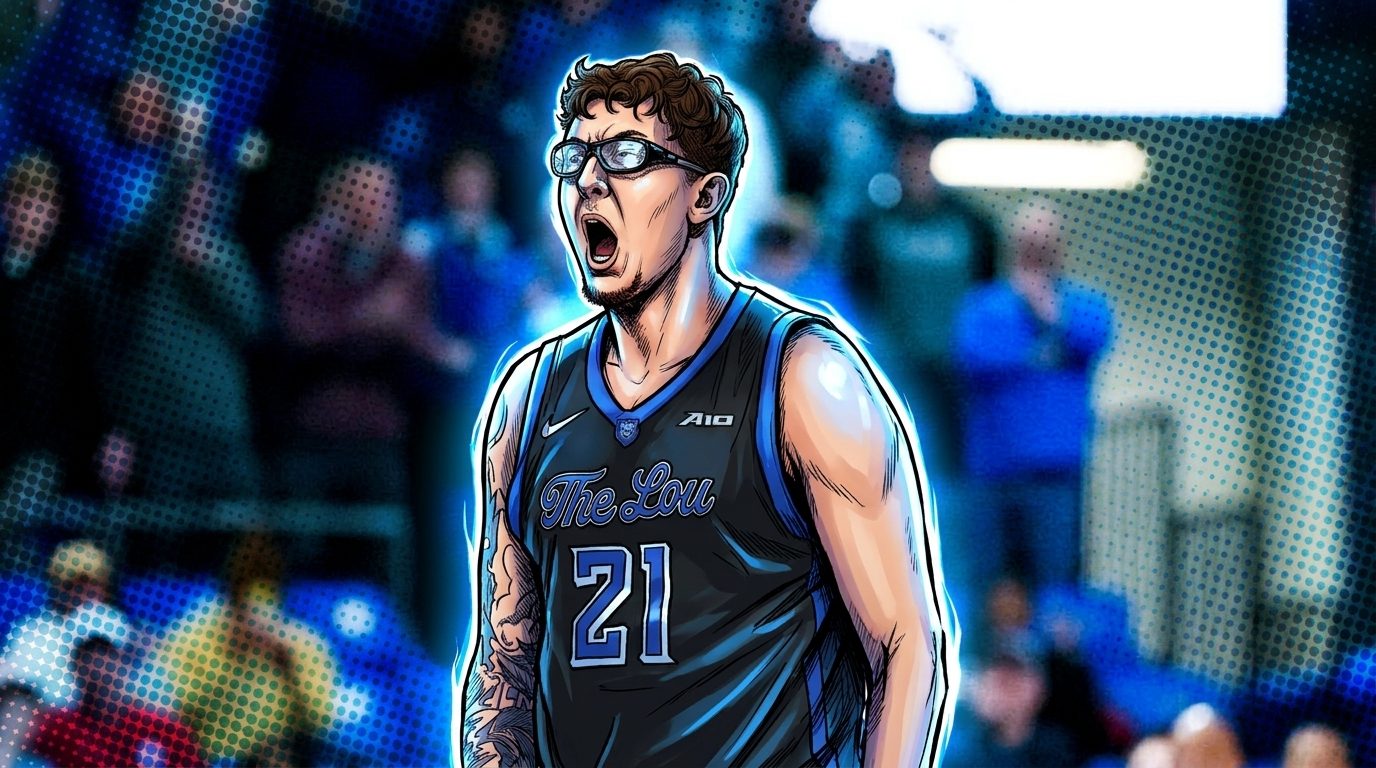

The NCAA has a rule about how long a player can play, and as of Thursday it also has a St. Louis city judge who decides whether that rule applies to a given 6-foot-10 forward. Robbie Avila, the reigning A-10 Player of the Year, got a preliminary injunction from Judge Jason Sengheiser, who ruled that Saint Louis can carry him as a 16th man on the roster until a trial that could be months away. That is the whole eligibility regime now: a rule on paper and a lottery in practice.
Start with the paper. The NCAA moved to five-for-five, five seasons in five years, clocked from age 19 or high school graduation, whichever comes first. ESPN notes the five-for-five rule was not meant to reach athletes from the 2022 class who had already used up their eligibility, which is how the association ended up with a pile of lawsuits and judges who have mostly sided with the plaintiffs. Mark Few put it plainly: “The NCAA screwed up on this deal.” He added that the NCAA should “be fair and let these [class of] ’22s in.”
Now the practice. Avila is 23. He has started 132 of 137 career games, two seasons at Indiana State and then on to Saint Louis behind coach Josh Schertz, averaging 17.3 points as a junior and 12.8 last season for a 29-6 team that won the A-10 regular-season title. Nobody disputes that he is a college basketball player. The question the court answered is whether he gets to keep being one, and the answer arrived in the form of a roster slot the rulebook does not contain.
Picture a speed limit posted at 55 on one side of a county line and 25 on the other, with no sign telling you which side you are on until you are already pulled over. The driver argues jurisdiction, because the number is no use to him. That is where the sport has landed. The rule is not repealed and it is not enforced. It sits there, waiting for a plaintiff to find a courtroom.
The injunction is step two. The restraining order that came first arrived in October with a hearing already on the calendar.
https://x.com/TheFieldOf68/status/2113764346186563805
Step two invites a step three. Players and coaches fear that an NCAA appeal could make players ineligible again, and Jon Scheyer predicted exactly that rhythm: “I think these cases are going to go well into the season.” He expects some players to get an injunction, be eligible for a stretch, and then not be. Nothing in the ESPN report says the NCAA has appealed Avila’s ruling; the fear alone is enough to make a coach wonder who is on his bench next week.
Friday night supplies the funniest exhibit. Saint Louis plays Missouri, and Missouri’s Mark Mitchell spent the summer with the Denver Nuggets. Avila spent his in Lakers summer league. Mitchell is part of a Kentucky eligibility lawsuit, a win ESPN says holds only for now. Both men have been to the professional side of the fence and both are on the college side because a court said so. The game will be played under rules that two different courtrooms wrote.
The counterargument is that this is simply how rights work. Courts exist to catch an organization that overreached, and the NCAA overreached when it wrote a rule and then forgot the class it hit. Fair enough; the judges are doing what judges do. But a remedy that gets handed out player by player, with an expiration nobody can name, works as a raffle with a legal retainer attached, and the athletes who cannot afford a ticket never get drawn.
Avila gets his season on Friday night. Whether he gets all of it belongs to a judge who has not been drawn yet.