Denver Nuggets
The Denver Nuggets began in 1967 as an ABA charter franchise and, behind three-time MVP Nikola Jokic, captured their first NBA championship in the 2023 Finals.
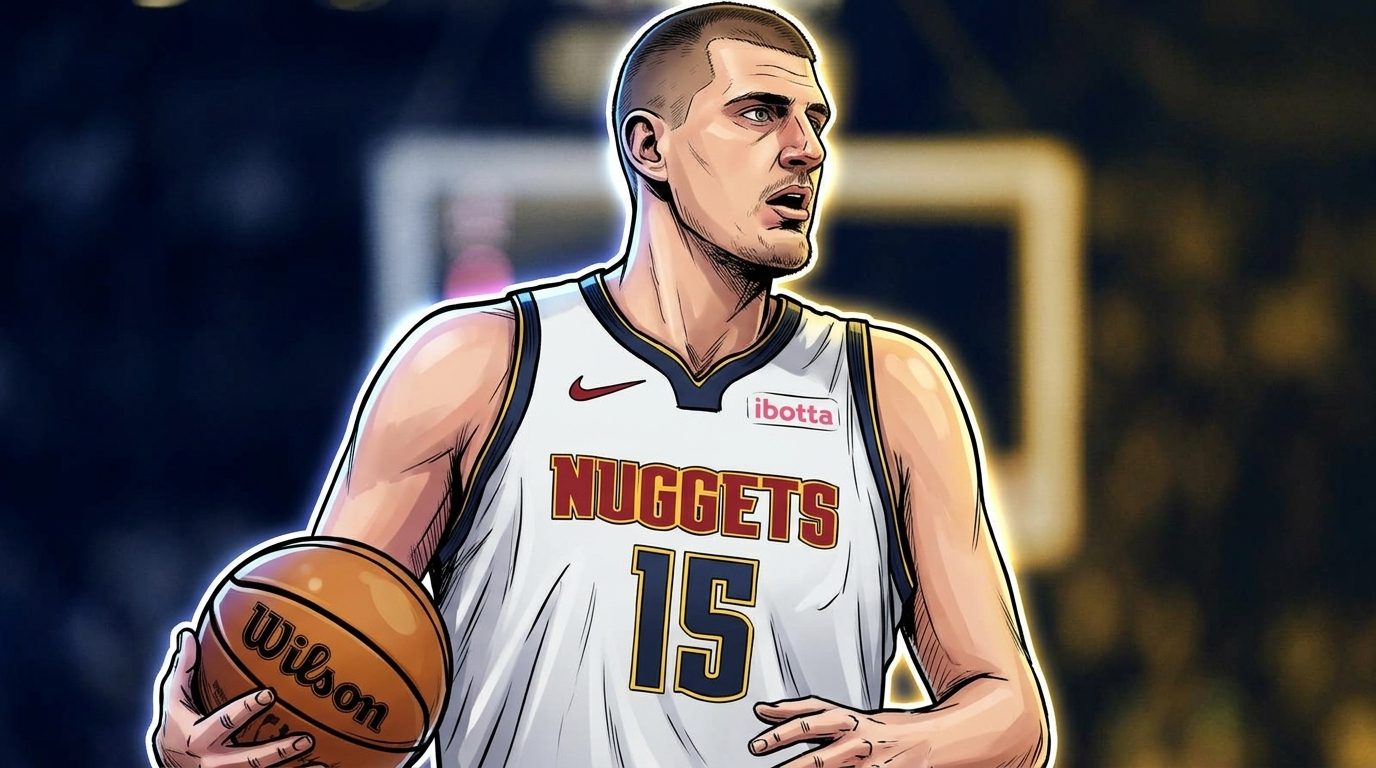
The Denver Nuggets are the NBA’s resident mile-high institution, a franchise that spent nearly five decades as one of the league’s most watchable and most frustrating teams before a Serbian second-round draft pick turned them into champions. Founded in 1967 as a charter member of the American Basketball Association and absorbed into the NBA through the 1976 merger, Denver has fielded some of the highest-scoring teams in basketball history, pulled off the single most famous upset in playoff seeding history, and — behind center Nikola Jokić — won its first title in 2023. Through the 2025-26 season the franchise owns a 2,471–2,306 all-time record across the ABA and NBA, a mark that hides just how wide the swings between its peaks and its valleys have been.
| Vitals | |
|---|---|
| Founded | 1967 (as the Denver Rockets, ABA) |
| League / conf. / div. | NBA — Western Conference, Northwest Division |
| Arena | Ball Arena, Denver (opened 1999 as the Pepsi Center; renamed October 2020) |
| Owner | Stan Kroenke (Kroenke Sports & Entertainment) |
| Head coach | David Adelman (since May 22, 2025) |
| Titles | 1 — 2023 (NBA) |
From Larks to Rockets: the ABA years (1967–1976)
The franchise was almost stillborn. Conceived in 1967 as the Kansas City-bound “Larks,” it landed in Denver under the ownership of the Ringsby Rocket Truck Lines and took the court as the Denver Rockets, a charter team in the brand-new ABA. Forward-center Byron Beck, whose No. 40 would become the first number the team ever retired, anchored those early rosters and stayed a full decade.
The red-white-and-blue era peaked in the mid-1970s. After the team renamed itself the Nuggets on August 7, 1974 — a move made partly to smooth an eventual jump to the NBA — Denver posted a 65–19 record in 1974-75, still the best winning percentage in franchise history. The following year, with rookie David Thompson and former Kentucky Colonel Dan Issel aboard, the Nuggets went 60–24 and reached the 1976 ABA Finals, losing to Julius Erving and the New York Nets in six games. That spring Denver also hosted the famous 1976 ABA All-Star Game and its first slam dunk contest, a showcase that helped sell the pro-basketball world on the high-flying Thompson.
David Thompson and the leap to the NBA (1975–1980)
When the ABA folded, Denver was one of four survivors. The Nuggets joined the NBA for 1976-77 and, far from being overwhelmed, won 50 games and the Midwest Division in their first year. “Skywalker” Thompson was the draw — a 44-inch-vertical guard whose No. 33 hangs in the rafters — and on April 9, 1978 he poured in 73 points against the Detroit Pistons on the season’s final day in a losing bid for the scoring title against San Antonio’s George Gervin.
Thompson and Issel pushed Denver to the edge of the Finals. The 1977-78 team reached the Western Conference Finals before falling to the Seattle SuperSonics, the deepest run of the franchise’s first NBA decade. Injuries and off-court troubles cut Thompson’s prime short, and by 1979-80 the Nuggets had slid to 30–52.
Doug Moe and the “Enver Nuggets” (1980–1990)
No team in NBA history scored like Doug Moe’s Nuggets. Hired in 1980, the gravel-voiced Moe installed a pass-happy motion offense with no set plays, and the 1981-82 team averaged 126.5 points per game, the highest single-season scoring average in NBA history. The teams scored in triple digits for 136 straight games and were nicknamed the “Enver Nuggets” — all offense, no “D.”
Alex English made the system sing. The silky forward led the NBA in scoring in 1982-83, made eight straight All-Star teams, and remains the franchise’s all-time leading scorer with 21,645 points; his No. 2 was retired on March 2, 1993. Alongside English, scoring guard Kiki Vandeweghe and do-everything guard Fat Lever (No. 12) powered the 1984-85 team to 52 wins and the Western Conference Finals, where the Los Angeles Lakers ended the run in five. Moe’s tenure produced nine straight playoff berths; the franchise later retired the banner “432” for his regular-season Denver wins.
Mutombo and the 1994 miracle (1990–1996)
After the Moe era collapsed to 20–62, a rookie center rebuilt the identity. Dikembe Mutombo, the fourth overall pick in 1991, turned Denver into a defensive team for the first time, winning the 1994-95 Defensive Player of the Year award. His No. 55 was retired on October 29, 2016.
Then came the greatest upset in playoff seeding history. As the No. 8 seed in 1994, the Nuggets met the 63-win, top-seeded Seattle SuperSonics — and became the first No. 8 seed ever to beat a No. 1 seed, winning the decisive Game 5 in overtime 98–94 on May 7, 1994. Mutombo blocked 31 shots in the series and ended the clincher flat on his back on the Seattle floor, cradling the ball, in one of the sport’s enduring images. Denver pushed the Utah Jazz to seven games in the next round before bowing out.
Rock bottom: the 11–71 season (1996–2003)
The late 1990s were as bad as the mid-’80s were fun. After Mutombo left in free agency, the franchise bottomed out at 11–71 in 1997-98, one of the worst records in NBA history, and strung together seven straight non-playoff seasons. The nadir repeated in 2002-03 (17–65). The one dividend of all that losing was high draft position — and the lottery balls that followed changed everything.
Carmelo Anthony’s decade (2003–2011)
The 2003 draft delivered a franchise cornerstone. Denver took Carmelo Anthony third overall, and the scoring forward ended the playoff drought immediately, dragging the Nuggets back to the postseason as a rookie. Denver reached the playoffs in each of Anthony’s full seasons but ran into a buzzsaw Western Conference, losing in the first round five years in a row from 2004 through 2008.
A midseason trade finally broke the ceiling. After acquiring Allen Iverson in December 2006 and then flipping him for veteran point guard Chauncey Billups in November 2008, the 2008-09 Nuggets won 54 games and reached the Western Conference Finals for the first time since 1985, falling to Kobe Bryant’s Lakers in six. Anthony forced his way out in a February 22, 2011 blockbuster trade to the New York Knicks, closing the most consistent stretch of winning in team history to that point.
George Karl’s 57 wins (2011–2015)
The post-Melo Nuggets got better, not worse. Reconfigured into a deep, star-less, breakneck team, Denver won 57 games in 2012-13, tied for the most in franchise history, and coach George Karl was named NBA Coach of the Year. The catch was familiar: a first-round exit, this time to the sixth-seeded Golden State Warriors in six. Karl was fired days later, and the franchise tumbled back into the lottery for three straight seasons — the losing that set up its greatest find.
The Jokić ascent (2014–2022)
The 41st pick in the 2014 draft became the best player the franchise has ever had. Nikola Jokić, selected during a Taco Bell commercial break, debuted in 2015-16 and steadily remade Denver’s offense around his elite passing from the center spot. With guard Jamal Murray beside him, the Nuggets returned to the playoffs in 2018-19 (54 wins) and survived a seven-game second round against Portland that included a quadruple-overtime Game 3, a 140–137 Blazers win that was the NBA’s first four-OT playoff game since 1953.
The 2020 bubble produced history. In the Orlando restart, Denver became the first team ever to erase two 3–1 series deficits in a single postseason, rallying past the Utah Jazz and then the Los Angeles Clippers — Murray scoring 40 in the Game 7 clincher — before the Lakers ended their Western Conference Finals run. Jokić won back-to-back MVP awards in 2020-21 and 2021-22, the first MVPs in franchise history, even as injuries to Murray and Michael Porter Jr. cost Denver two playoff runs.
2023: a mile-high championship
The breakthrough came with the band finally healthy. The 2022-23 Nuggets went 53–29 and seized the No. 1 seed in the West. In the playoffs they beat Minnesota, Phoenix, and then swept the Lakers in the Western Conference Finals to reach the first NBA Finals in franchise history.
Denver closed it out at home. Facing the eighth-seeded Miami Heat, the Nuggets won the series 4–1, clinching with a 94–89 Game 5 victory on June 12, 2023. Jokić, who in that postseason became the first player ever to lead a playoff run in total points, rebounds, and assists, was named Finals MVP after averaging 30.2 points, 14.0 rebounds, and 7.2 assists in the series. Fifty-six years after its ABA debut, the franchise had its banner.
Life after the title (2023–2026)
Defending it proved harder than winning it. The 2023-24 Nuggets matched the franchise record with 57 wins but lost a seven-game second round to Minnesota. Jokić won his third MVP in 2023-24, joining a short list of three-time winners. In a stunning move, the front office fired title-winning coach Michael Malone and general manager Calvin Booth with three games left in 2024-25; lead assistant David Adelman took over, carried the team to a seven-game second round against Oklahoma City, and was retained as permanent head coach on May 22, 2025. The 2025-26 team won 54 games but fell to Minnesota in the first round, leaving Denver still searching for a second title with Jokić in his prime.
Retired numbers
Denver has retired seven numbers, honoring the stars of its ABA origins, its high-scoring 1980s, its defensive 1990s, and the coach who defined its style. The NBA also retired No. 6 league-wide for Bill Russell on August 11, 2022.
| No. | Player | Pos. | Team tenure | Retired |
|---|---|---|---|---|
| 2 | Alex English | F | 1980–1990 | Mar. 2, 1993 |
| 12 | Fat Lever | G | 1984–1990 | Dec. 2, 2017 |
| 33 | David Thompson | G/F | 1975–1982 | Nov. 7, 1992 |
| 40 | Byron Beck | C/F | 1967–1977 | Dec. 16, 1977 |
| 44 | Dan Issel | C/F | 1975–1985 | Apr. 5, 1985 |
| 55 | Dikembe Mutombo | C | 1991–1996 | Oct. 29, 2016 |
| 432 | Doug Moe (coach) | — | 1980–1990 | Nov. 7, 2002 |
Season by season
Every season the franchise has played, from the 1967 ABA launch through 2025-26, folded by decade (newest first).
The 2020s 309–173 · 6 playoff berths · 1 title (2023)
| Season | W–L | Finish | Playoffs |
|---|---|---|---|
| 2025-26 | 54-28 | 3rd (West) | Lost 1st round (Timberwolves 2–4) |
| 2024-25 | 50-32 | 4th (West) | Lost Conf. Semis (Thunder 3–4) |
| 2023-24 | 57-25 | 2nd (West) | Lost Conf. Semis (Timberwolves 3–4) |
| 2022-23 | 53-29 | 1st (West) | Won NBA Finals (Heat 4–1) |
| 2021-22 | 48-34 | 6th (West) | Lost 1st round (Warriors 1–4) |
| 2020-21 | 47-25 | 3rd (West) | Lost Conf. Semis (Suns 0–4) |
The 2010s 430–365 · 5 playoff berths · 1 conference finals
| Season | W–L | Finish | Playoffs |
|---|---|---|---|
| 2019-20 | 46-27 | 3rd (West) | Lost Conf. Finals (Lakers 1–4) |
| 2018-19 | 54-28 | 2nd (West) | Lost Conf. Semis (Trail Blazers 3–4) |
| 2017-18 | 46-36 | 9th (West) | Missed playoffs |
| 2016-17 | 40-42 | 9th (West) | Missed playoffs |
| 2015-16 | 33-49 | 11th (West) | Missed playoffs |
| 2014-15 | 30-52 | 12th (West) | Missed playoffs |
| 2013-14 | 36-46 | 11th (West) | Missed playoffs |
| 2012-13 | 57-25 | 3rd (West) | Lost 1st round (Warriors 2–4) |
| 2011-12 | 38-28 | 6th (West) | Lost 1st round (Lakers 3–4) |
| 2010-11 | 50-32 | 5th (West) | Lost 1st round (Thunder 1–4) |
The 2000s 422–398 · 7 playoff berths · 1 conference finals
| Season | W–L | Finish | Playoffs |
|---|---|---|---|
| 2009-10 | 53-29 | 4th (West) | Lost 1st round (Jazz 2–4) |
| 2008-09 | 54-28 | 2nd (West) | Lost Conf. Finals (Lakers 2–4) |
| 2007-08 | 50-32 | 8th (West) | Lost 1st round (Lakers 0–4) |
| 2006-07 | 45-37 | 6th (West) | Lost 1st round (Spurs 1–4) |
| 2005-06 | 44-38 | 3rd (West) | Lost 1st round (Clippers 1–4) |
| 2004-05 | 49-33 | 7th (West) | Lost 1st round (Spurs 1–4) |
| 2003-04 | 43-39 | 8th (West) | Lost 1st round (Timberwolves 1–4) |
| 2002-03 | 17-65 | 14th (West) | Missed playoffs |
| 2001-02 | 27-55 | 12th (West) | Missed playoffs |
| 2000-01 | 40-42 | 11th (West) | Missed playoffs |
The 1990s 279–509 · 2 playoff berths · 1994 No. 8-over-No. 1 upset
| Season | W–L | Finish | Playoffs |
|---|---|---|---|
| 1999-00 | 35-47 | 10th (West) | Missed playoffs |
| 1998-99 | 14-36 | 12th (West) | Missed playoffs |
| 1997-98 | 11-71 | 14th (West) | Missed playoffs |
| 1996-97 | 21-61 | 12th (West) | Missed playoffs |
| 1995-96 | 35-47 | 10th (West) | Missed playoffs |
| 1994-95 | 41-41 | 8th (West) | Lost 1st round (Spurs 0–3) |
| 1993-94 | 42-40 | 8th (West) | Lost Conf. Semis (Jazz 3–4) |
| 1992-93 | 36-46 | 9th (West) | Missed playoffs |
| 1991-92 | 24-58 | 11th (West) | Missed playoffs |
| 1990-91 | 20-62 | 14th (West) | Missed playoffs |
The 1980s 443–377 · 9 playoff berths · 1 conference finals
| Season | W–L | Finish | Playoffs |
|---|---|---|---|
| 1989-90 | 43-39 | 7th (West) | Lost 1st round (Spurs 0–3) |
| 1988-89 | 44-38 | 6th (West) | Lost 1st round (Suns 0–3) |
| 1987-88 | 54-28 | 2nd (West) | Lost Conf. Semis (Mavericks 2–4) |
| 1986-87 | 37-45 | 8th (West) | Lost 1st round (Lakers 0–3) |
| 1985-86 | 47-35 | 3rd (West) | Lost Conf. Semis (Rockets 2–4) |
| 1984-85 | 52-30 | 2nd (West) | Lost Conf. Finals (Lakers 1–4) |
| 1983-84 | 38-44 | 7th (West) | Lost 1st round (Jazz 2–3) |
| 1982-83 | 45-37 | 6th (West) | Lost Conf. Semis (Spurs 1–4) |
| 1981-82 | 46-36 | 4th (West) | Lost 1st round (Suns 1–2) |
| 1980-81 | 37-45 | 8th (West) | Missed playoffs |
The 1970s 448–384 · 9 playoff berths · 1 ABA Finals · joined NBA in 1976
| Season | W–L | Finish | Playoffs |
|---|---|---|---|
| 1979-80 | 30-52 | 9th (West) | Missed playoffs |
| 1978-79 | 47-35 | 4th (West) | Lost 1st round (Lakers 1–2) |
| 1977-78 | 48-34 | 2nd (West) | Lost Conf. Finals (SuperSonics 2–4) |
| 1976-77 | 50-32 | 2nd (West) | Lost Conf. Semis (Trail Blazers 2–4) |
| 1975-76 | 60-24 | 1st (ABA) | Lost ABA Finals (Nets 2–4) |
| 1974-75 | 65-19 | 1st (ABA West) | Lost Div. Finals (Pacers 3–4) |
| 1973-74 | 37-47 | 5th (ABA West) | Lost ABA Div. Tiebreaker (Conquistadors 0–1) |
| 1972-73 | 47-37 | 3rd (ABA West) | Lost Div. Semis (Pacers 1–4) |
| 1971-72 | 34-50 | 4th (ABA West) | Lost Div. Semis (Pacers 3–4) |
| 1970-71 | 30-54 | 5th (ABA West) | Lost ABA Div. Tiebreaker (Chaparrals 0–1) |
The 1960s 140–100 · 3 playoff berths (ABA)
| Season | W–L | Finish | Playoffs |
|---|---|---|---|
| 1969-70 | 51-33 | 1st (ABA West) | Lost Div. Finals (Stars 1–4) |
| 1968-69 | 44-34 | 3rd (ABA West) | Lost Div. Semis (Oaks 3–4) |
| 1967-68 | 45-33 | 3rd (ABA West) | Lost Div. Semis (Buccaneers 2–3) |
By the numbers
Franchise marks
Ranks
- 1st Points, franchise history — Alex English (21,645)
- 1st Rebounds, franchise history — Nikola Jokić (8,977)
- 1st Assists, franchise history — Nikola Jokić (6,080)
- 2nd Points, franchise history — Nikola Jokić (18,009)
Honors
- 2023 NBA champion
- 3× NBA MVP — Nikola Jokić (2021, 2022, 2024)
- 2023 Finals MVP — Nikola Jokić
- 1994-95 Defensive Player of the Year — Dikembe Mutombo
- 2012-13 Coach of the Year — George Karl
- 10 NBA division titles
- 1976 ABA Finalist
Per Basketball-Reference and franchise career leaders, through Oct. 12, 2026.
The arguments
Is Jokić’s Denver a dynasty or a one-off? Supporters point to three MVPs, the 2020 bubble comebacks, and a 2023 title won with a four-game sweep of the Lakers in the conference finals as proof of a sustained contender. Skeptics counter that the title is bracketed by second-round exits in 2024 and 2025 and a first-round loss in 2026, and argue a roster with the best player alive should have more than one banner to show for it.
Was firing Michael Malone the right call? Removing a championship coach with three games left before the 2025 playoffs drew widespread criticism as a reckless, disrespectful piece of timing. Ownership and its defenders argued the team had plateaued and that the roster-building under general manager Calvin Booth, also dismissed, had thinned the bench; Adelman’s run to a seven-game second round that spring gave both sides ammunition.
Were Doug Moe’s “Enver Nuggets” ahead of their time or entertaining underachievers? Moe’s teams led the NBA in scoring and sold out McNichols Sports Arena but never reached the Finals, and critics of the era note the defense that cost them in the playoffs. Admirers argue the pace-and-space, pass-first ethos of the 1980s looks a lot like the modern game — and a lot like the Jokić offense that finally won it all.
Why it matters
The Nuggets spent most of their existence as basketball’s great entertainers and great near-misses — the ABA showmen, the fastest-scoring team ever assembled, the No. 8 seed that shocked Seattle, the franchise that could never quite break through. That history is exactly what made 2023 land the way it did: a title not handed to a glamour market but built, patiently, around a 41st pick and a run-and-pass style the organization had been chasing for forty years. For a city and a fan base conditioned to heartbreak, the Nuggets became the rare team whose breakthrough felt earned by everyone who came before it.