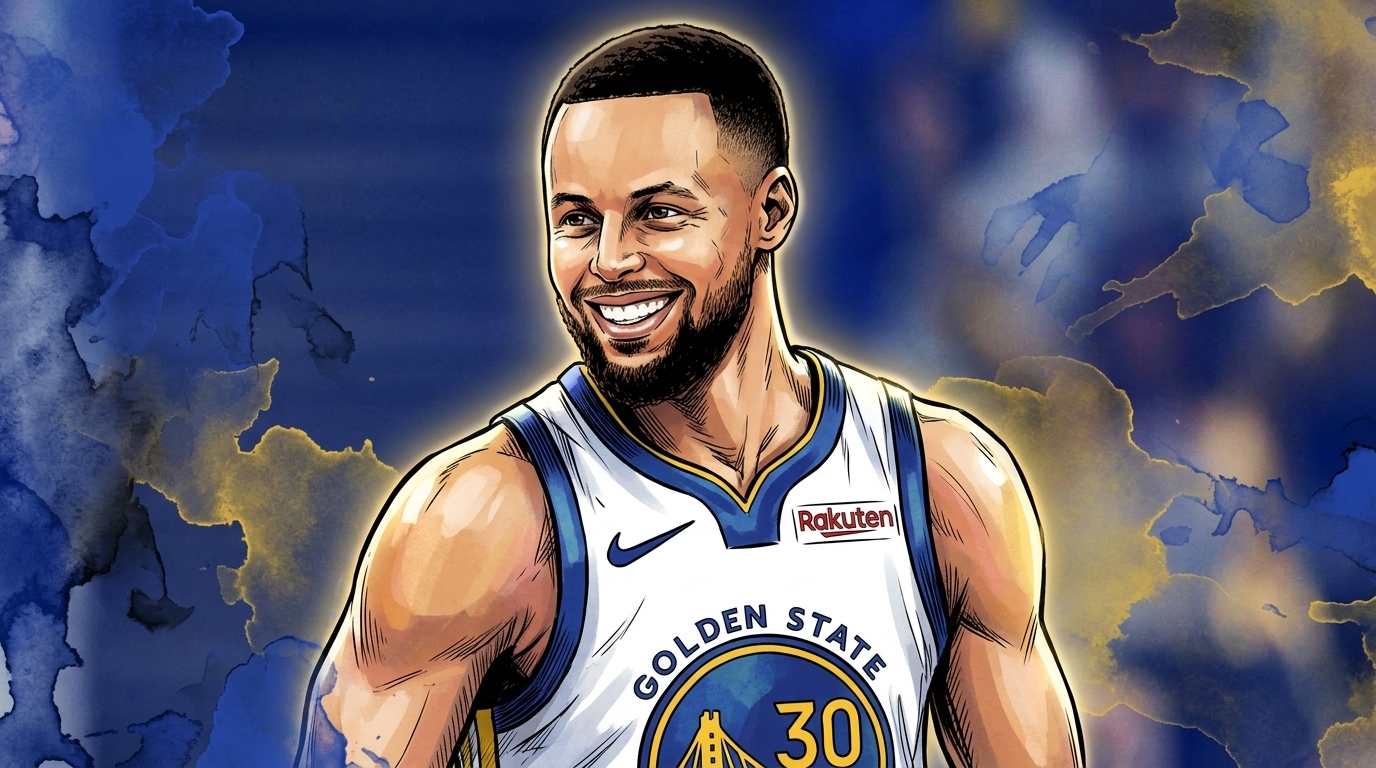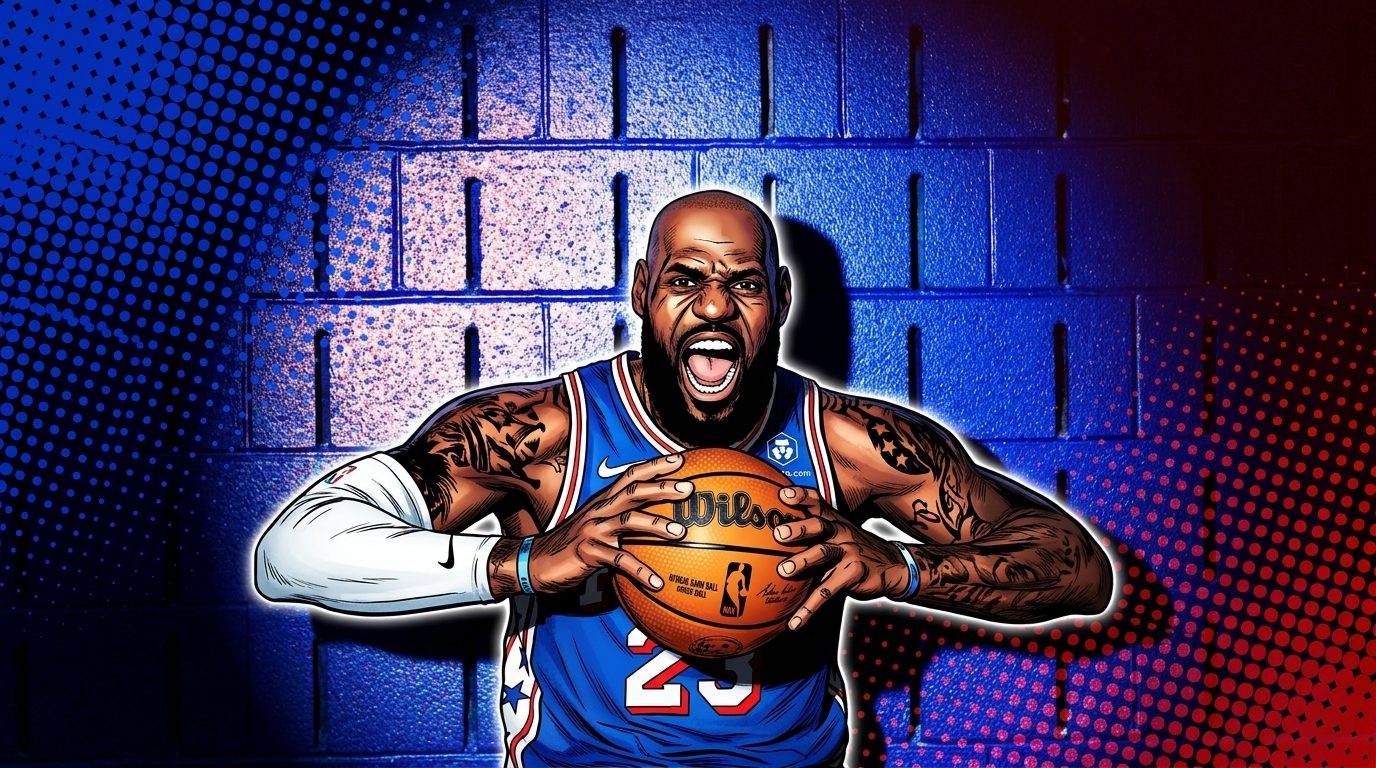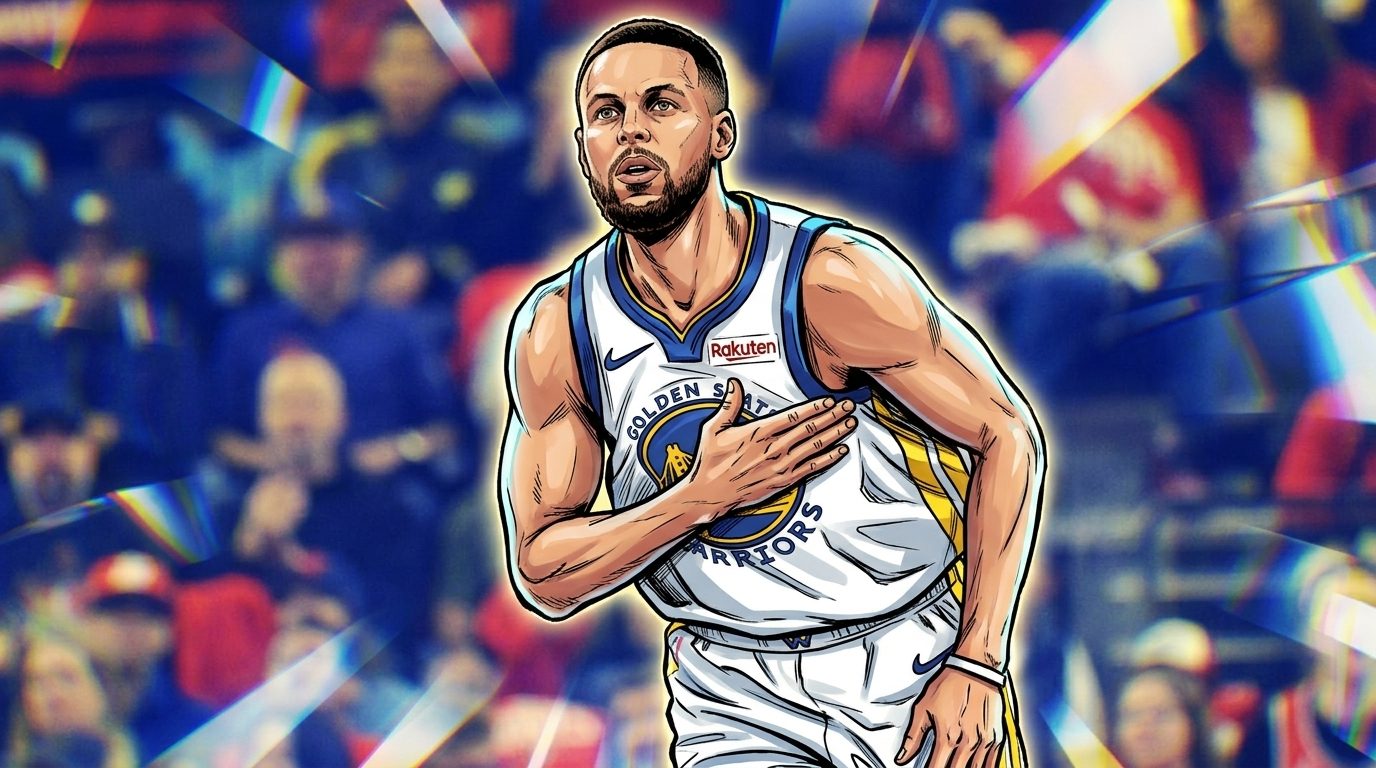

Fifteen used to be a LeBron James number. Forty-point games, age 35 and up: nobody had matched him there, not Jordan, not prime Durant, not anybody. Stephen Curry tied it Wednesday night in Minneapolis, and the box score says the two of them now share the same line. The shot chart says they got there on two different highways.
Curry dropped 44 on the Timberwolves on 11-of-27 shooting, hit 6 of his 16 three-point attempts, and went a perfect 16-for-16 from the free-throw line in a 119-114 Warriors win, adding 6 assists for good measure. That tied him with LeBron for the most 40-point games by a player age 35 or older, 15 apiece. The number everyone will repeat is 15. The number that actually matters is the one nobody’s tracking: how little of Curry’s scoring depends on the first thing an aging athlete’s body gives up. The decline conversation around older NBA scorers almost always borrows LeBron’s aging curve as the default model, because LeBron is the most famous 38-year-old bucket-getter anyone has studied up close. But that curve is built on explosiveness and finishing pressure at the rim, the exact physical tools that erode first. Curry was never that player. Tying LeBron’s record lines up two completely different aging mechanisms on the same number, which means the two-year decline clock everyone keeps starting on Curry has been measuring the wrong thing the whole time.
How Many 40-Point Games Does Steph Curry Have at Age 35 or Older?
Curry now has 15 career 40-point games at age 35 or older, tying LeBron James for the most in NBA history, with nobody else within shouting distance. Michael Jordan sits third at 12. Kevin Durant has 9, James Harden 6 and Kareem Abdul-Jabbar 4.
That’s basically the shortlist of the greatest scorers alive past 35, and Curry just climbed to the top of it on a night that doubled as a reminder of how specific this version of dominance looks. Six of his sixteen three-point attempts fell. He never missed from the line. The Warriors needed every bit of the 44-point outburst to hold off Minnesota on the road.
https://twitter.com/whristan1/status/2115685264463179810
Curry’s line was the headline of that whole slate, and it wasn’t particularly close.
Why LeBron’s Aging Curve Was the Wrong Template for Curry All Along
Start with what’s actually declining in LeBron’s game, because that’s the model everyone keeps grafting onto Curry. LeBron took just 19.6% of his field goal attempts from point-blank range this season, the lowest share of his career, down again from a career-low 24.2% the year before. That’s a quietly brutal number for a player whose identity for two decades was downhill pressure: get a step, get to the paint, finish through contact. As the burst fades, so does the shot profile that made him unguardable, and the league has watched him shift into a slower, more perimeter-and-post version of himself.
Curry’s game doesn’t run on that engine, and it never did. His career finishing percentage at the rim is a strong 65.2%, but it has never been the thing his scoring was built on the way it was for LeBron. Curry’s shot diet skews toward movement, stepbacks, and catch-and-shoot threes, shots that live or die on footwork, timing, and a release that hasn’t slowed down, not on how fast a 38-year-old can blow past a help defender. Legs matter less when a shot leaves your hand from 27 feet with a hand in your face than when it has to survive a collision at the rim.
What Does Curry’s Shot Diet Actually Look Like at 38?
Through the start of 2026-27, 57% of Curry’s shot attempts have come from three-point range, and he’s posting a 61.8 true shooting percentage doing it, a number that would be a career year for most volume scorers half his age. Zoom out to the full 2025-26 season and the shooting splits read like a player in his prime: 46.8% from the field, 39.3% from three, 92.3% from the line, 26.6 points a night across 43 games.
That production runs on footwork and a release, not a sprinter’s first step, which is exactly why it travels so well into a 38-year-old’s legs.
https://twitter.com/NBA/status/2115796523208646865
That’s the clip that gets the plays-of-the-night treatment. The quieter story is underneath it in the box score: a 38-year-old shooting the ball exactly like he always has, just winning a different way.
Did the Warriors Already Answer the Decline Question With $116 Million?
The strongest evidence in this whole conversation showed up in September, not in a shot chart. Curry and the Warriors agreed to a two-year, $116 million extension that runs through the 2028-29 season, his 20th in the league. Curry turned down $20 million to stay in Golden State, taking less than his max so the front office would have cap flexibility to build around him. That’s not a farewell-tour contract. The organization that watches his body up close every single day, that knows exactly how his joints and his jumper have aged, just bet two more years of near-star production on him.
Ownership doesn’t hand that kind of money to a player it expects to fall off a cliff in year two. At some point the Warriors ran out of excuses on Curry’s decline question, and the organization answered it the only way that actually counts: with real money and real term.
Jordan is the next name on that list, parked at 12 for good, nowhere close to catching the two guys who passed him. LeBron will likely add to his own total before Curry adds to his, different roster, different offensive math. But if you’re trying to figure out who’s more likely to be the lone name on top of this list by next spring, stop looking at the calendar and start looking at shot location. The player who needs the rim is the one with a ticking clock. Curry settled that argument from 27 feet out, sixteen times in one night, and didn’t miss a single free throw doing it.