MLB All-Time Home Run Leaders
Barry Bonds leads MLB's all-time home run list with 762, ahead of Hank Aaron and Babe Ruth — the full career leaderboard, records and the steroid-era debate.
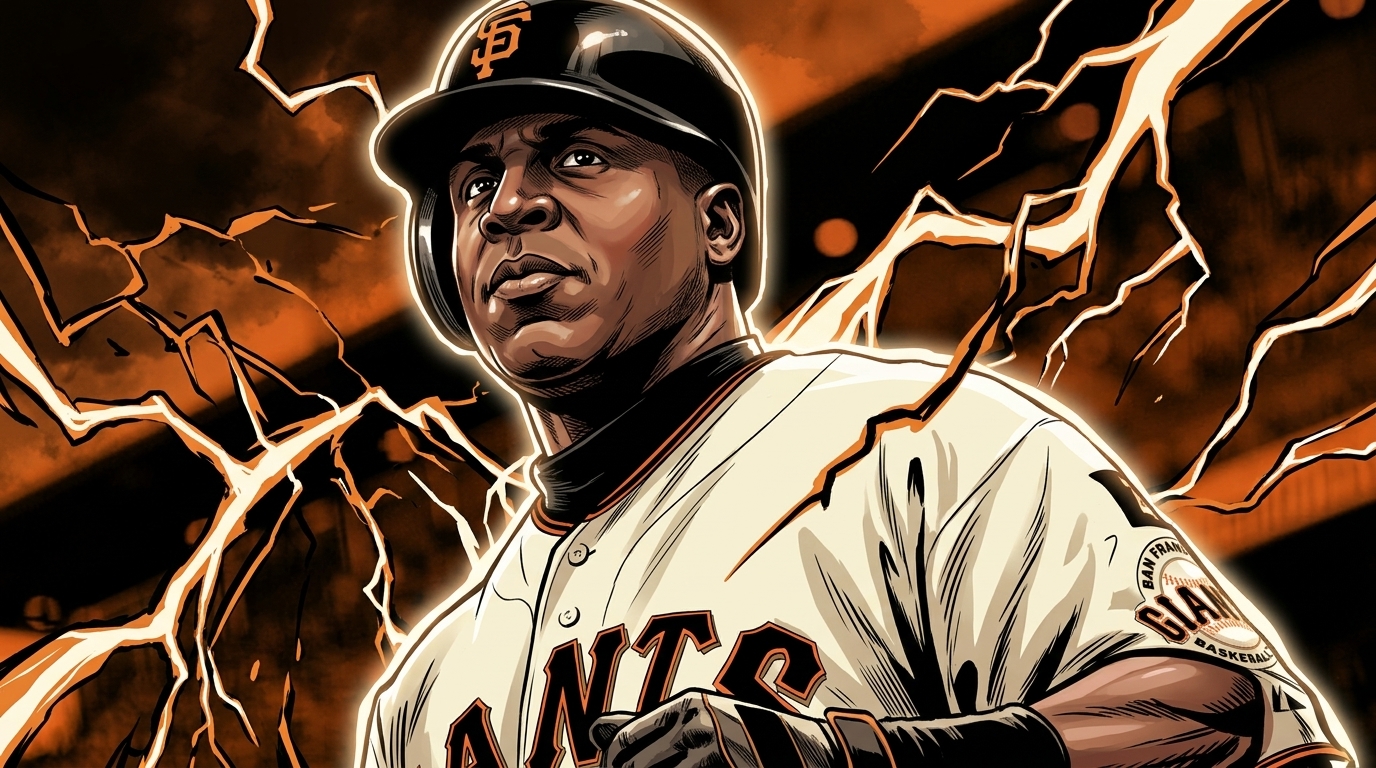
The all-time Major League Baseball home run leader is Barry Bonds, who finished his career with 762 home runs and, as of Sept. 25, 2026, still sits atop the career list by a margin of seven over Hank Aaron. Bonds passed Aaron on Aug. 7, 2007, driving his 756th home run to right-center field at San Francisco’s AT&T Park off Washington’s Mike Bacsik, and retired after that season having never been caught. The top of the leaderboard has not changed since — Aaron, Babe Ruth and a cluster of turn-of-the-millennium sluggers fill out a top 15 that no active player is close to disturbing.
The leaderboard
| Rank | Name | HR | Team / Years |
|---|---|---|---|
| 1 | Barry Bonds | 762 | Pirates, Giants (1986–2007) |
| 2 | Hank Aaron | 755 | Braves, Brewers (1954–1976) |
| 3 | Babe Ruth | 714 | Red Sox, Yankees, Braves (1914–1935) |
| 4 | Albert Pujols | 703 | Cardinals, Angels, Dodgers (2001–2022) |
| 5 | Alex Rodriguez | 696 | Mariners, Rangers, Yankees (1994–2016) |
| 6 | Willie Mays | 660 | Giants, Mets (1951–1973) |
| 7 | Ken Griffey Jr. | 630 | Mariners, Reds, White Sox (1989–2010) |
| 8 | Jim Thome | 612 | Indians, Phillies, others (1991–2012) |
| 9 | Sammy Sosa | 609 | Cubs, others (1989–2007) |
| 10 | Frank Robinson | 586 | Reds, Orioles, others (1956–1976) |
| 11 | Mark McGwire | 583 | Athletics, Cardinals (1986–2001) |
| 12 | Harmon Killebrew | 573 | Senators/Twins, others (1954–1975) |
| 13 | Rafael Palmeiro | 569 | Rangers, Orioles, Cubs (1986–2005) |
| 14 | Reggie Jackson | 563 | Athletics, Yankees, Angels (1967–1987) |
| 15 | Manny Ramirez | 555 | Indians, Red Sox, others (1993–2011) |
At a glance
Per Baseball-Reference career leaders and active leaders, through Sept. 25, 2026.
The chase
No active player is within realistic range of the top of the list. The active career leader is Giancarlo Stanton, whose 456 home runs would require another 306 to pass Bonds — a total nearly as large as his entire career output to date. Behind him among active hitters are Mike Trout at 426 and Manny Machado at 398, per Baseball-Reference. Trout, who reached his 400th career home run during the 2025 season, is the only other active player besides Stanton to clear the 400 mark, and even his total leaves him more than 330 short of the record. The most recent additions to the upper reaches of the all-time list were Albert Pujols, who reached 703 before retiring after the 2022 season, and Alex Rodriguez, who finished with 696 in 2016. With Pujols retired, the top 15 contains no active players as of Sept. 25, 2026, and the chase for Bonds is, for now, dormant rather than live. Because home run totals accrue slowly and careers rarely extend past 20 seasons, a serious run at 762 would need a hitter to average 40-plus home runs for the better part of two decades — a pace only a handful of players in history have sustained.
How it’s measured
The list is a pure counting statistic: total regular-season home runs across a career, with no adjustment for era, ballpark, schedule length or league quality. That neutrality is also its central distortion. Ruth accumulated 714 home runs across seasons of 154 games, before integration and before night baseball, and in an era when many contemporaries did not swing for power at all. Aaron and Mays built their totals across the 1950s, ’60s and early ’70s in larger, pitcher-friendly parks. The players ranked fourth through 15th — Pujols and A-Rod excepted in part — largely compiled their numbers during the offense-heavy 1990s and 2000s, when expansion diluted pitching, ballparks shrank and, in several documented cases, performance-enhancing drug use was widespread. Baseball-Reference publishes a companion rate metric, at-bats per home run, precisely because raw totals reward longevity and volume as much as pure power. The same neutrality is why the list is so stable: because it never resets or adjusts, a new name enters the top 15 only when a hitter physically out-homers the man ahead of him, which is why the order at the very top has held since 2007.
The arguments
The list is where baseball’s steroid-era reckoning is most visible, and the arguments run along two lines. The first is counting stat versus rate: defenders of the older names note that Ruth led his league in home runs 12 times and, by at-bats-per-home-run, remains among the most efficient sluggers ever, while critics of a longevity-driven list point out that raw totals flatter players who simply played longer. The second, sharper argument concerns legitimacy. Bonds, McGwire, Sosa, Palmeiro and Rodriguez were all linked to performance-enhancing drugs through federal investigation, congressional testimony or reporting, and the Baseball Writers’ Association of America declined to elect Bonds or Roger Clemens across their full 10 years of eligibility, per ESPN. In their final year on the writers’ ballot, Bonds drew 66% of the vote and Clemens 65.2%, both short of the 75% threshold required for induction. Supporters counter that MLB never asterisked the records and that Commissioner Bud Selig’s office recognized Bonds as the leader when the record fell in 2007. Aaron himself, whose mark stood for 33 years, sent a recorded tribute the night it was broken. Both the sport’s official record and its Hall of Fame verdict stand — and they do not agree.
Per Baseball-Reference, Wikipedia, NBC News and reporting on the 2007 record.
Why it matters
The home run is baseball’s most legible act of dominance, and its all-time leaderboard is the sport’s most argued-over ledger — a place where the numbers are settled but the meaning is not. Bonds holds the record and the writers kept him out of Cooperstown; Aaron’s 755 carried the weight of chasing a legend under threat, and Ruth’s 714 defined an entire era before either man was born. The list rewards the reader who knows not just the figure but the argument behind it, which is why it remains one of the most durable reference questions in American sports.