New England Patriots
The complete history of the New England Patriots, from their 1960 AFL origins through the six-title Belichick–Brady dynasty and Drake Maye's 2025 revival.
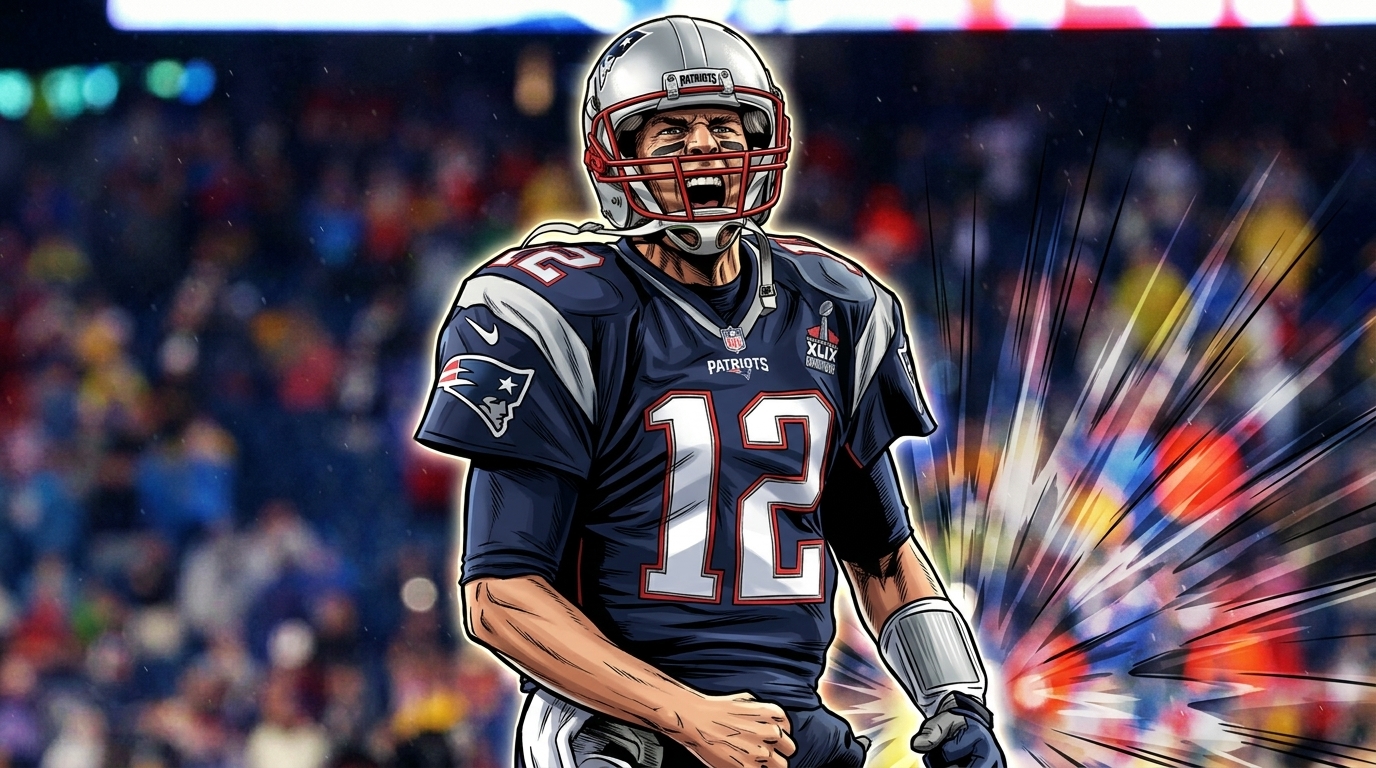
The New England Patriots are a founding franchise of the American Football League who spent four decades as one of professional football’s afterthoughts before becoming, in the 21st century, the defining dynasty of the sport’s modern era. Between the 2001 and 2018 seasons the Patriots won six Super Bowls under coach Bill Belichick and quarterback Tom Brady — a run tied with the Pittsburgh Steelers for the most in NFL history — and reached a record 12 Super Bowls in all. That the same organization began as the Boston Patriots, a chronically undercapitalized team that played home games in five different stadiums in its first eleven years, is the through-line of one of the great turnarounds in American sports.
| Vitals | |
|---|---|
| Founded | November 16, 1959; first season 1960 (as the Boston Patriots) |
| League / conf. / div. | NFL — American Football Conference (AFC), AFC East |
| Stadium | Gillette Stadium, Foxborough, Mass. (opened 2002; cap. ~65,000) |
| Owner | Robert Kraft (since 1994) |
| Head coach | Mike Vrabel (as of Sep. 29, 2026) |
| Super Bowl titles | 6 — 2001, 2003, 2004, 2014, 2016, 2018 seasons |
Boston and the birth of a franchise (1960–1970)
The franchise was born on November 16, 1959, when Boston businessman Billy Sullivan was awarded the AFL’s eighth and final charter franchise, capitalized with a reported $25,000. A fan naming contest produced the “Patriots,” a nod to the Revolutionary-era colonists, and the “Pat Patriot” logo. Undercapitalized from the start, the Boston Patriots became football nomads, playing home games at Boston University’s Nickerson Field, then Fenway Park, Boston College’s Alumni Stadium and Harvard Stadium.
On the field the early Patriots were competitive but star-crossed. Flanker-kicker Gino Cappelletti scored the first points in AFL history, led the league in scoring five times and was named the 1964 AFL MVP after a 155-point season. Quarterback Babe Parilli, fullback Jim Nance — the 1966 AFL MVP and rushing champion with 1,458 yards — and future Hall of Fame linebacker Nick Buoniconti gave Boston a genuine core.
Their one title shot came in 1963. After a 7-6-1 regular season, Boston won an Eastern Division tiebreaker over Buffalo, only to be routed 51-10 by the San Diego Chargers in the AFL Championship Game on January 5, 1964. It would be the franchise’s deepest run for 22 years. The Patriots joined the NFL through the 1970 AFL–NFL merger.
Foxborough and the wilderness years (1971–1984)
In 1971 the franchise finally got a home of its own and a new identity. Schaefer Stadium opened in Foxborough, roughly halfway between Boston and Providence, and on March 22, 1971 the team renamed itself the New England Patriots. The stadium was later renamed Sullivan Stadium and then Foxboro Stadium, and it served as home through 2001.
The 1976 team was the era’s best and its most bitterly remembered. Led by quarterback Steve Grogan and guard John Hannah, New England went 11-3 and earned its first playoff berth since 1963. In the divisional round at Oakland on December 18, 1976, a disputed roughing-the-passer call on Ray Hamilton — flagged by official Ben Dreith — extended the Raiders’ final drive to a 24-21 win. The Patriots won the AFC East in 1978 but again lost in the divisional round.
Ownership grew as unstable as the results. The Sullivan family’s finances deteriorated through the early 1980s, foreshadowing a decade of turnover in the owner’s box even as the roster — Hannah, cornerback Mike Haynes, linebacker Steve Nelson — quietly stocked itself with eventual honored names.
The Raymond Berry Patriots and Super Bowl XX (1985–1990)
Under coach Raymond Berry, the 1985 Patriots authored the franchise’s first Super Bowl run. An 11-5 team that entered as a wild card, New England won three straight road playoff games — at the Jets, Raiders and Dolphins — to reach Super Bowl XX. There the dream ended violently: the Chicago Bears won 46-10 on January 26, 1986, holding the Patriots to a Super Bowl-record seven rushing yards as quarterback Tony Eason was pulled without completing a pass.
The high faded fast. New England won the AFC East in 1986 but lost in the divisional round, and by 1990 the team bottomed out at 1-15, the worst record in franchise history. Victor Kiam had bought the club from Sullivan in 1988 for roughly $84 million; within four years it would change hands twice more, and a locker-room harassment scandal during the 1990 season deepened the sense of an organization in disarray.
Bledsoe, Parcells, and the near-move to St. Louis (1993–1999)
The franchise nearly left New England entirely. St. Louis businessman James Orthwein bought the team in 1992 and explored relocating it to Missouri. In January 1994, local paper magnate Robert Kraft — who already owned Foxboro Stadium and its lease — bought the Patriots for a then-record $172 million, outmaneuvering a larger St. Louis bid and keeping the team in Massachusetts. Kraft’s purchase is the hinge on which the entire modern history turns.
Bill Parcells had arrived in 1993 and used the No. 1 overall pick on Washington State quarterback Drew Bledsoe. New England surged from 2-14 to a playoff berth in 1994 and, in the 1996 season, reached Super Bowl XXXI, losing 35-21 to the Green Bay Packers on January 26, 1997 as Desmond Howard’s 99-yard kickoff return sealed the MVP. Parcells left for the Jets in a power struggle with Kraft; Pete Carroll coached the team to the 1997 AFC East title and two more playoff appearances before being fired after 1999.
The dynasty begins: three rings in four years (2001–2005)
Everything changed in 2000. Kraft hired Bill Belichick as head coach, and that April the Patriots drafted Michigan quarterback Tom Brady 199th overall. When a Mo Lewis hit felled Bledsoe in Week 2 of 2001, Brady took over an 11-5 team. In the divisional round, the Tuck Rule Game — a snowbound 16-13 overtime win over Oakland decided by a controversial replay reversal and two Adam Vinatieri field goals — sent New England toward its first title.
Vinatieri’s 48-yard kick as time expired beat the heavily favored St. Louis Rams 20-17 in Super Bowl XXXVI on February 3, 2002, with Brady named MVP. The Patriots repeated the formula twice more: a 32-29 win over Carolina in Super Bowl XXXVIII, decided by another late Vinatieri field goal, and a 24-21 defeat of Philadelphia in Super Bowl XXXIX on February 6, 2005, with Deion Branch as MVP.
Between those titles New England won an NFL-record 21 straight games (regular season and playoffs combined), spanning 2003 and 2004. Ty Law, Richard Seymour, Tedy Bruschi, Willie McGinest and Rodney Harrison anchored a defense that made the three-titles-in-four-years run a team achievement, not merely a quarterback’s.
Perfection, heartbreak, and three more titles (2006–2019)
The 2007 Patriots chased history and fell one game short. Adding receiver Randy Moss, New England became the first team to go 16-0 in the regular season; Brady threw a then-record 50 touchdown passes and won MVP, and Moss caught a record 23. But in Super Bowl XLII, David Tyree’s helmet catch keyed a New York Giants upset, 17-14, leaving the Patriots 18-1. The Giants beat them again 21-17 in Super Bowl XLVI after the 2011 season.
The second wave of titles came with a new supporting cast — tight end Rob Gronkowski, receiver Julian Edelman, back James White. Malcolm Butler’s goal-line interception preserved a 28-24 win over Seattle in Super Bowl XLIX (2014 season). Two years later the Patriots erased a 28-3 deficit against Atlanta to win Super Bowl LI 34-28 in overtime, the greatest comeback in Super Bowl history. After a 41-33 loss to Philadelphia in Super Bowl LII, a smothering defense won Super Bowl LIII 13-3 over the Rams — the lowest-scoring Super Bowl ever, with Edelman as MVP.
The era brought scandal alongside the silverware. The 2007 Spygate case cost Belichick a $500,000 fine, the team $250,000 and a first-round pick for illegally taping opponents’ signals; the 2015 Deflategate dispute produced a Brady four-game suspension served in 2016, a $1 million team fine and two forfeited draft picks. On the field, the Patriots won 11 consecutive AFC East titles from 2009 through 2019 and reached eight straight AFC Championship Games (2011–2018), both league records.
Decline and the end of the Brady era (2020–2024)
The dynasty ended when Brady left in free agency for Tampa Bay in March 2020. With Cam Newton at quarterback, the Patriots went 7-9 and missed the playoffs, their first losing season since 2000. Rookie Mac Jones led a 10-7 return to the postseason in 2021, but the team lost the Wild Card round 47-17 at Buffalo and slid backward from there.
Belichick’s final seasons were his worst. New England went 8-9 in 2022 and 4-13 in 2023, and on January 11, 2024 the sides parted ways after 24 years, 266-121 in the regular season and six titles. His successor, former linebacker Jerod Mayo, lasted a single 4-13 season before Kraft fired him in January 2025. The one bright spot of the rebuild was quarterback Drake Maye, drafted third overall in 2024.
The Vrabel turnaround (2025–present)
On January 12, 2025 the Patriots hired Mike Vrabel — a linebacker on the first three championship teams and a former Tennessee Titans head coach — as the 16th coach in franchise history. The effect was immediate. Behind a second-year leap from Maye, New England went 14-3 in 2025, winning its first AFC East title since 2019 and its first division crown without Brady or Belichick since 1997. The 10-win improvement tied the largest single-season turnaround in NFL history.
Maye finished as the MVP runner-up, throwing for 4,394 yards with 31 touchdowns against 8 interceptions and leading the league in passer rating and completion percentage (72.0%); he was named second-team All-Pro, and Vrabel won NFL Coach of the Year. The Patriots beat the Chargers 16-3, Texans 28-16 and Broncos 10-7 to reach Super Bowl LX, where they lost 29-13 to the Seattle Seahawks on February 8, 2026 at Levi’s Stadium.
The 2026 season opened unevenly. As of September 29, 2026 the Patriots were 1-2 and third in the AFC East, having lost a Super Bowl rematch to Seattle 13-10 in Week 1, beaten Pittsburgh 20-3 in Week 2 and been routed 35-6 at Jacksonville in Week 3, with Maye struggling through a six-interception start. Vrabel remained the head coach and Maye the starter.
Retired numbers
The Patriots have retired eight uniform numbers, spanning the AFL originals of the 1960s through Tom Brady, whose No. 12 was retired in 2024. Retired numbers are distinct from the separate team Hall of Fame, which honors dozens of additional figures.
| No. | Player | Pos. | Team tenure | Retired |
|---|---|---|---|---|
| 12 | Tom Brady | QB | 2000–2019 | 2024 |
| 20 | Gino Cappelletti | FL/K | 1960–1970 | 1971 |
| 40 | Mike Haynes | CB | 1976–1982 | 1996 |
| 57 | Steve Nelson | LB | 1974–1987 | 1988 |
| 73 | John Hannah | G | 1973–1985 | 1990 |
| 78 | Bruce Armstrong | T | 1987–2000 | 2001 |
| 79 | Jim Lee Hunt | DT | 1960–1970 | 1971 |
| 89 | Bob Dee | DE | 1960–1967 | 1968 |
Season by season
Every season since 1960, folded by decade, newest first.
Per the franchise season index and Pro-Football-Reference, through the 2025 season.
The 2020s 47–54 · 2 playoff berths · 1 Super Bowl
| Season | W–L | Finish | Playoffs |
|---|---|---|---|
| 2020 | 7-9 | 3rd AFC East | — |
| 2021 | 10-7 | 2nd AFC East | Lost Wild Card (BUF) |
| 2022 | 8-9 | 3rd AFC East | — |
| 2023 | 4-13 | 4th AFC East | — |
| 2024 | 4-13 | 4th AFC East | — |
| 2025 | 14-3 | 1st AFC East | Lost Super Bowl LX (SEA) |
The 2010s 125–35 · 10 playoff berths · 3 Super Bowl titles
| Season | W–L | Finish | Playoffs |
|---|---|---|---|
| 2010 | 14-2 | 1st AFC East | Lost Divisional (NYJ) |
| 2011 | 13-3 | 1st AFC East | Lost Super Bowl XLVI (NYG) |
| 2012 | 12-4 | 1st AFC East | Lost AFC Championship (BAL) |
| 2013 | 12-4 | 1st AFC East | Lost AFC Championship (DEN) |
| 2014 | 12-4 | 1st AFC East | Won Super Bowl XLIX (SEA) |
| 2015 | 12-4 | 1st AFC East | Lost AFC Championship (DEN) |
| 2016 | 14-2 | 1st AFC East | Won Super Bowl LI (ATL) |
| 2017 | 13-3 | 1st AFC East | Lost Super Bowl LII (PHI) |
| 2018 | 11-5 | 1st AFC East | Won Super Bowl LIII (LAR) |
| 2019 | 12-4 | 1st AFC East | Lost Wild Card (TEN) |
The 2000s 112–48 · 7 playoff berths · 3 Super Bowl titles
| Season | W–L | Finish | Playoffs |
|---|---|---|---|
| 2000 | 5-11 | 5th AFC East | — |
| 2001 | 11-5 | 1st AFC East | Won Super Bowl XXXVI (STL) |
| 2002 | 9-7 | 2nd AFC East | — |
| 2003 | 14-2 | 1st AFC East | Won Super Bowl XXXVIII (CAR) |
| 2004 | 14-2 | 1st AFC East | Won Super Bowl XXXIX (PHI) |
| 2005 | 10-6 | 1st AFC East | Lost Divisional (DEN) |
| 2006 | 12-4 | 1st AFC East | Lost AFC Championship (IND) |
| 2007 | 16-0 | 1st AFC East | Lost Super Bowl XLII (NYG) |
| 2008 | 11-5 | 2nd AFC East | — |
| 2009 | 10-6 | 1st AFC East | Lost Wild Card (BAL) |
The 1990s 68–92 · 4 playoff berths · 1 Super Bowl
| Season | W–L | Finish | Playoffs |
|---|---|---|---|
| 1990 | 1-15 | 5th AFC East | — |
| 1991 | 6-10 | 4th AFC East | — |
| 1992 | 2-14 | 5th AFC East | — |
| 1993 | 5-11 | 4th AFC East | — |
| 1994 | 10-6 | 2nd AFC East | Lost Wild Card (CLE) |
| 1995 | 6-10 | 4th AFC East | — |
| 1996 | 11-5 | 1st AFC East | Lost Super Bowl XXXI (GB) |
| 1997 | 10-6 | 1st AFC East | Lost Divisional (PIT) |
| 1998 | 9-7 | 4th AFC East | Lost Wild Card (JAX) |
| 1999 | 8-8 | 5th AFC East | — |
The 1980s 78–74 · 3 playoff berths · 1 Super Bowl
| Season | W–L | Finish | Playoffs |
|---|---|---|---|
| 1980 | 10-6 | 2nd AFC East | — |
| 1981 | 2-14 | 5th AFC East | — |
| 1982 | 5-4 | 7th (AFC) | Lost First Round |
| 1983 | 8-8 | 2nd AFC East | — |
| 1984 | 9-7 | 2nd AFC East | — |
| 1985 | 11-5 | 3rd AFC East | Lost Super Bowl XX (CHI) |
| 1986 | 11-5 | 1st AFC East | Lost Divisional (DEN) |
| 1987 | 8-7 | 2nd AFC East | — |
| 1988 | 9-7 | 3rd AFC East | — |
| 1989 | 5-11 | 4th AFC East | — |
The 1970s 66–78 · 2 playoff berths
| Season | W–L | Finish | Playoffs |
|---|---|---|---|
| 1970 | 2-12 | 5th AFC East | — |
| 1971 | 6-8 | 3rd AFC East | — |
| 1972 | 3-11 | 5th AFC East | — |
| 1973 | 5-9 | 3rd AFC East | — |
| 1974 | 7-7 | 3rd AFC East | — |
| 1975 | 3-11 | 5th AFC East | — |
| 1976 | 11-3 | 2nd AFC East | Lost Divisional (OAK) |
| 1977 | 9-5 | 3rd AFC East | — |
| 1978 | 11-5 | 1st AFC East | Lost Divisional (HOU) |
| 1979 | 9-7 | 2nd AFC East | — |
The 1960s 63–68–9 · 1 AFL title game (Boston Patriots, AFL)
| Season | W–L | Finish | Playoffs |
|---|---|---|---|
| 1960 | 5-9 | 4th AFL East | — |
| 1961 | 9-4-1 | 2nd AFL East | — |
| 1962 | 9-4-1 | 2nd AFL East | — |
| 1963 | 7-6-1 | 1st AFL East | Lost AFL Championship (SD) |
| 1964 | 10-3-1 | 2nd AFL East | — |
| 1965 | 4-8-2 | 3rd AFL East | — |
| 1966 | 8-4-2 | 2nd AFL East | — |
| 1967 | 3-10-1 | 5th AFL East | — |
| 1968 | 4-10 | 4th AFL East | — |
| 1969 | 4-10 | 3rd AFL East | — |
By the numbers
Franchise marks
Per the franchise season index and Pro-Football-Reference, through the 2025 season.
Ranks
- 1st Super Bowl appearances, NFL history (12)
- T-1st Super Bowl titles (6, tied with Pittsburgh)
- 1st Consecutive division titles, NFL history (11, 2009–2019)
- 4th Franchise valuation ($10.4B, 2026)
Per Britannica, the Patriots and Sportico, through 2026.
Honors
- 6× Super Bowl champion (2001, 2003, 2004, 2014, 2016, 2018)
- 12× AFC / AFL conference champion
- 23× division champion
- 2007: 16–0 regular season
- Tom Brady — 3× NFL MVP (2007, 2010, 2017)
- Mike Vrabel — 2025 NFL Coach of the Year
- Drake Maye — 2025 second-team All-Pro
Per Wikipedia and the Pro Football Hall of Fame, through the 2025 season.
The arguments
Was the dynasty the greatest ever, or an asterisked one? Supporters point to six titles, nine Super Bowl trips in Brady’s tenure and sustained excellence unmatched in the salary-cap era. Detractors cite Spygate and Deflategate as evidence that the Patriots bent the rules, and note that four of the six titles were decided by a field goal or less — margins that turned on the Tuck Rule reversal, Vinatieri’s kicks and Butler’s goal-line interception. Both readings are defended vigorously; the league’s own investigations produced fines and forfeited picks but never vacated a result.
Brady or Belichick? With the pairing broken up after 2019, the debate over who drove the dynasty became testable. Brady won a seventh ring in Tampa Bay in the 2020 season, his first year away; Belichick’s Patriots went 29-38 without him and missed the playoffs three times in four years before he departed. Belichick’s backers counter that he built the defenses and drafted Brady in the first place, and that no coach in the modern game sustained more. The question remains a staple of the sport’s arguments rather than a settled one.
Why it matters
The Patriots are the rare franchise whose story bends the full arc of its league — from an undercapitalized AFL original that nearly relocated twice to the standard against which 21st-century dynasties are measured, and now to a young team rebuilding around Drake Maye and Mike Vrabel. For New England fans, the six Lombardi Trophies are the payoff on four decades of near-misses and false starts, and the reason a region that once treated pro football as an afterthought came to regard it as a birthright.