
There’s a number buried in this week’s AP Top 25 that matters more than any single upset. Call it the Hold Rate: the share of the poll that kept the exact spot it held seven days earlier. In an ordinary week, some chunk of the Top 25 doesn’t move at all. This week, by the poll’s own count, the Hold Rate was zero.
The Georgia Bulldogs, Notre Dame Fighting Irish, Indiana Hoosiers, Alabama Crimson Tide and Texas Longhorns — five of the AP’s top seven — all lost on the same Saturday, the first time that’s happened since the poll began in 1936. The Miami Hurricanes are No. 1 for the first time since 2002. BYU is No. 2 for the first time since the team that won it all in 1984. None of that is a correction to a hierarchy the committee got slightly wrong in August. It’s proof the hierarchy was never real to begin with, and every ranking issued before Week 8 should be read as a guess wearing a number.
https://x.com/AP_Top25/status/2111880415954845928
The poll’s own account put it almost that bluntly over the weekend: nobody stayed put, Miami jumped to No. 1 for the first time since 2002, and BYU climbed to No. 2 off one of the stranger weekends in recent memory. When the body that produces the rankings sounds surprised by its own output, that’s worth sitting with. I went back through all twenty-five results looking for the one that proved the committee right going into the weekend. There wasn’t one.
How Did Five Top-Seven Teams Lose in One Week?
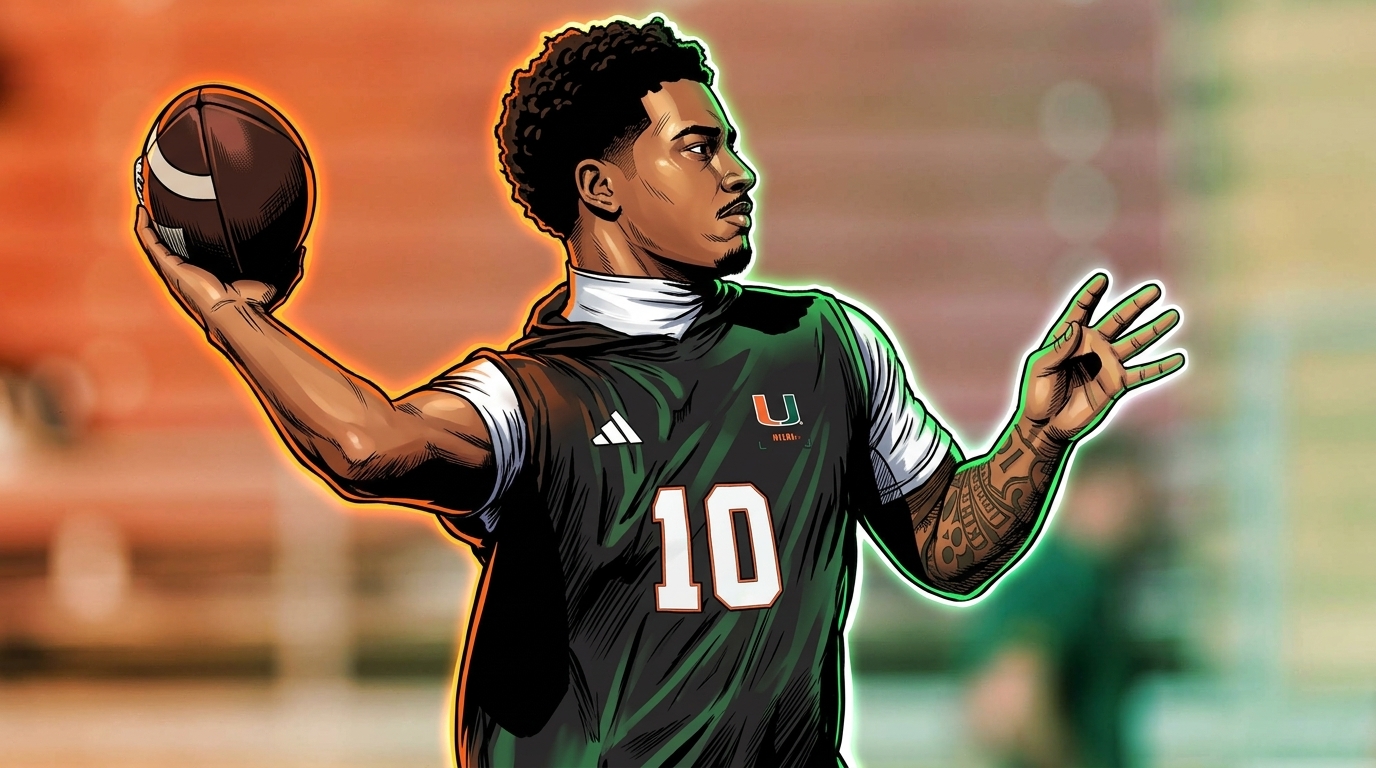
Miami jumped from No. 3 to No. 1 after Georgia, Notre Dame, Indiana, Alabama and Texas, five of the AP’s top seven, all lost on the same Saturday, the first time that’s happened in the poll’s history. Miami beat Florida State in double overtime to stay unbeaten and inherited the top spot by survival, not dominance.
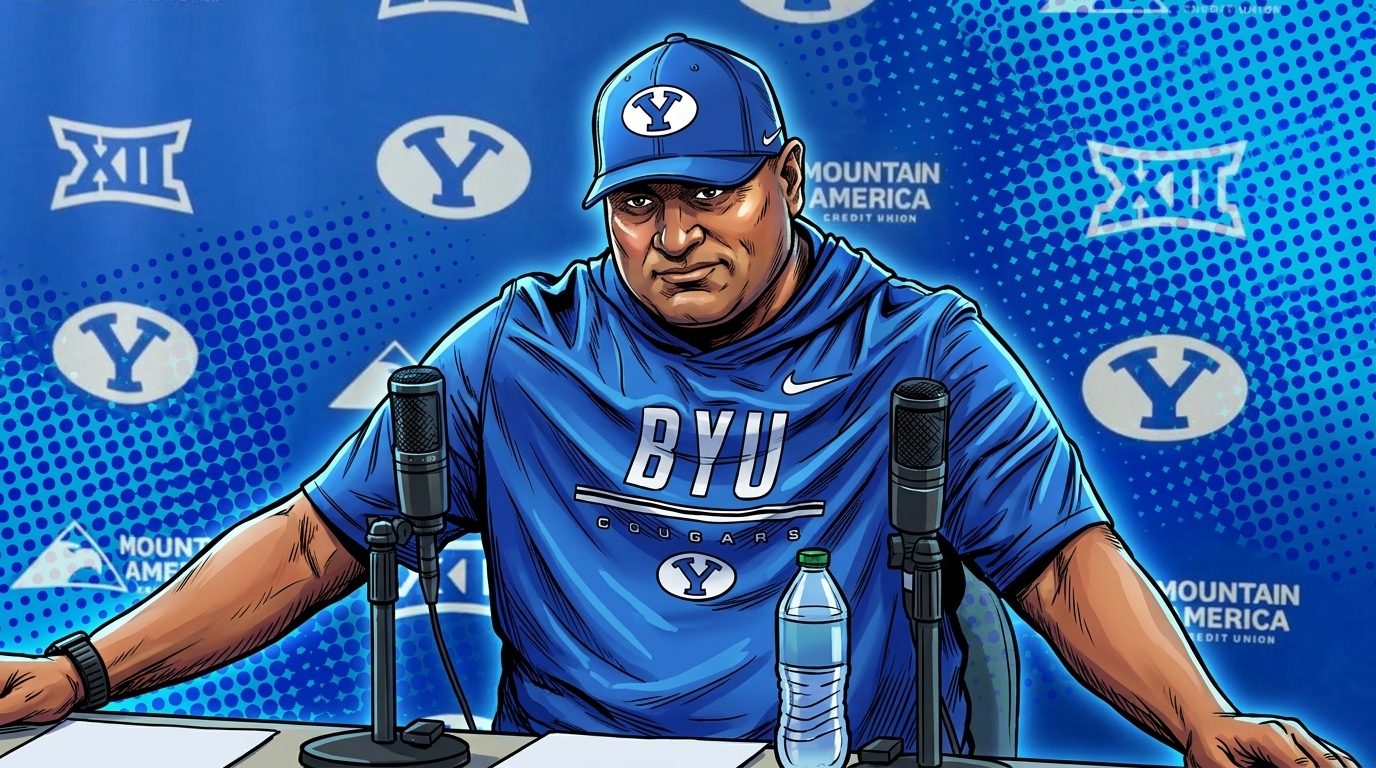
Start with the two teams that actually held serve. Miami needed double overtime and a sealed door to beat an unranked Florida State team, Bryce Fitzgerald’s interception of a Daniels pass in the second overtime finally ending it at 43-35. BYU needed a Bear Bachmeier touchdown pass with less than two minutes left to hold off Notre Dame at home as a 10.5-point underdog, 28-24. Both stayed unbeaten at 6-0. Neither performance looked like a top-two team validating a ranking it already held. Both looked like teams that simply survived a week five other contenders couldn’t.
Then count the carnage. Georgia lost at home to unranked Auburn on a walk-off field goal, 27-24, and fell from No. 1 to No. 5. Notre Dame lost on the road to a BYU team that didn’t even have its own best running back, LJ Martin, available, and a disputed final sequence didn’t help, dropping the Irish from No. 2 to No. 4. Indiana’s 22-game winning streak ended against Ohio State, 19-15, after Nick Marsh was ruled just barely out of bounds on what would have been the game-winning touchdown catch, sliding the Hoosiers from No. 5 to No. 6. Alabama lost 26-10 to Tennessee and cratered from No. 6 to No. 13. Texas lost to an unranked opponent for the second straight week, falling 27-24 to Florida and dropping twelve spots, from No. 7 to No. 19. None of this should have been entirely shocking; the poll was already breaking earlier this season, and Texas was No. 1 in Week 4 of this same year before any of this chaos started.
Five of seven. Same day. First time in the AP poll’s history, which dates back ninety years.
What Miami’s No. 1 Ranking Actually Proves
Miami’s run to No. 1 for the first time since 2002 happened less through dominance than through survival: five other programs lost while the Hurricanes didn’t. The Hurricanes’ ascension came with 40 of 70 first-place votes and a 22-point cushion over BYU, numbers that sound decisive until you remember the competition was Georgia, Notre Dame, Indiana, Alabama and Texas, all of whom just proved they couldn’t be trusted with a one-score game. Miami is No. 1 by default as much as by merit, which isn’t a knock on the Hurricanes so much as a measure of how thin the margin was between unbeaten contender and unranked upset victim the whole time.
BYU’s case is stranger. The BYU Cougars jumped six spots, from No. 8 to No. 2, their best ranking since the 1984 team won the national title outright. They got there by beating the team ranked directly above them as a double-digit underdog. Nothing about BYU’s résumé changed overnight. What changed is that the team sitting above them collapsed, and voters had nowhere else to put a 6-0 program that had just won the biggest game on its own schedule.
Not a single team in the entire Top 25 kept its previous ranking this week, winners and losers alike. Every position in a 25-team poll moved in the same seven-day window. That shift exposes what the committee was actually doing: building a new hierarchy from scratch, on the fly, with the same incomplete information it had been working from all along.
Why the Preseason Hierarchy Was Always a Guess
I run projection models for three different fantasy baseball leagues, and the lesson that never stops repeating is that a model built on a few weeks of data looks airtight right up until it isn’t. The AP Top 25 in October runs on the same logic with better production values. Voters rank 25 teams based on results against wildly uneven schedules, reputation carried over from last season, and a handful of nationally televised games treated as more informative than they are. The evidence suggests that process works fine right up until the sample stops cooperating. This week it stopped cooperating in five places at once.
The last time Georgia, Alabama and Texas all lost on the same day was October 26, 1996, three decades ago. That’s less a scheduling coincidence than a reminder that this level of simultaneous collapse is rare enough to count as a historical event, and rare events are exactly what a seven-game sample is worst at pricing in. A poll that can’t see a once-in-thirty-years outcome coming is simply doing the only thing a poll can do with six or seven games of evidence: extrapolate from too little and hope the extrapolation holds.
Notre Dame’s officiating problem complicates the Fighting Irish’s specific collapse, but it doesn’t rescue the larger pattern. Even if that one final sequence goes differently, four other top-seven teams still lose on the same day, and the Hold Rate still reads zero either way.
Rank teams in Week 8 off six games and you’re measuring noise and calling it a hierarchy. Rank them in Week 13 off eleven or twelve, and the sample finally separates the programs that are actually good from the ones that were just undefeated against favorable matchups. Miami and BYU are both unbeaten right now, standing mostly because everyone ranked above them fell in the same 24 hours. That’s enough to trust the top of this poll for exactly one more week. Ask again after Thanksgiving, once six more games of evidence have piled up. The answer will be different.